Adding new toys to your product range can attract customers and create fresh sales opportunities. However, introducing products at the wrong time may lead to excess inventory, missed selling seasons, or unnecessary purchasing costs.
So, when should you add new toys to your product range?
There is no fixed schedule that works for every business. The right time depends on customer demand, your existing inventory, seasonal opportunities, and how quickly new products can reach your shelves.
Understanding these factors helps retailers and wholesalers expand their assortments without adding unnecessary inventory risks.
Signs It’s Time to Add New Toys to Your Range
Knowing when to introduce new toys starts with understanding what your current assortment is missing.
Customers Are Looking for Products You Don’t Offer
Repeated customer inquiries can reveal gaps in your product range.
For example, if customers frequently ask for educational toys for younger children but your assortment mainly serves older age groups, adding suitable products may help address that demand.
Pay attention to customer questions, search queries on your website, and feedback from retail partners. These signals can help identify opportunities that sales reports alone may not reveal.
Your Sales Data Shows Room for Expansion
Review sell-through rates, stock availability, and sales performance across product categories.
Strong demand in a category may justify adding complementary products or introducing another price point. However, a bestselling toy that repeatedly sells out may simply need better replenishment rather than additional variations.
Effective toy assortment planning means distinguishing between products that need restocking and genuine gaps that new SKUs could fill.
Customer Preferences Are Changing
New play patterns, product functions, or consumer interests may create opportunities to refresh an existing category.
Before investing in unfamiliar products, consider whether the change reflects sustained customer demand or short-term attention.
A new toy should offer something meaningful that existing products do not already provide.
How Often Should You Refresh Your Toy Assortment?
Toy retailers should review their product assortments regularly, but that does not mean they need to introduce new products every month.
The appropriate refresh frequency depends on the types of toys being sold.
| Product Type | Recommended Approach |
|---|---|
| Evergreen toys | Maintain reliable sellers and introduce variations when demand supports them. |
| Seasonal toys | Plan new arrivals around relevant selling seasons and local demand. |
| Trend-driven toys | Test promising products before committing to larger quantities. |
Educational toys and selected baby toys may have relatively consistent year-round demand. Seasonal products, such as water toys and outdoor playsets, often require more specific launch planning.
Trend-driven toys may need faster evaluation, but speed should not replace demand validation.
A monthly or quarterly assortment review can be useful as an internal planning routine. The important point is to make purchasing decisions based on product performance and customer needs, not simply because another review date has arrived.
Plan New Toy Arrivals Around Selling Seasons
Seasonal demand is one of the clearest reasons to schedule new toy introductions.
Retailers need products available before customers begin shopping, not just when the selling season reaches its peak.
Different occasions create different opportunities:
| Selling Occasion | Relevant Toy Categories | Planning Consideration |
|---|---|---|
| Holiday gifting | Dolls, playsets, gift toys | Prepare inventory before major shopping and promotional periods. |
| Summer activities | Water toys, bubble toys, outdoor games | Consider local weather and school holidays. |
| Back-to-school | Educational toys, activity sets | Coordinate arrivals with the local school calendar. |
| Year-round demand | Selected baby and educational toys | Introduce products when clear assortment gaps appear. |
Seasonal toy inventory planning should reflect the market where products will be sold. A summer toy launch in Australia, for example, follows a different calendar from one in North America.
We have discussed about seasonal demand for outdoor toys and how selling windows vary across regions.
Remember that the selling season is not the purchasing deadline. Product selection, order confirmation, production, and transportation may need to begin well before the intended launch.
Work Backward from Your Target Launch Date
Once you know when customers should be able to purchase the new toys, work backward to determine when sourcing needs to begin.
The toy sourcing lead time depends on the selected products, order quantity, customization needs, shipping method, and destination market.
A typical planning sequence includes:
- Product selection and sampling: Review suitable products, specifications, and samples where needed.
- Approvals and production: Confirm packaging, product details, and order requirements before production.
- Inspection and shipping: Arrange applicable checks, shipment preparation, and transportation.
- Receiving and merchandising: Allow time for customs clearance where applicable, warehouse receiving, product listings, and store displays.
- Product launch: Make the toys available before the target selling window.
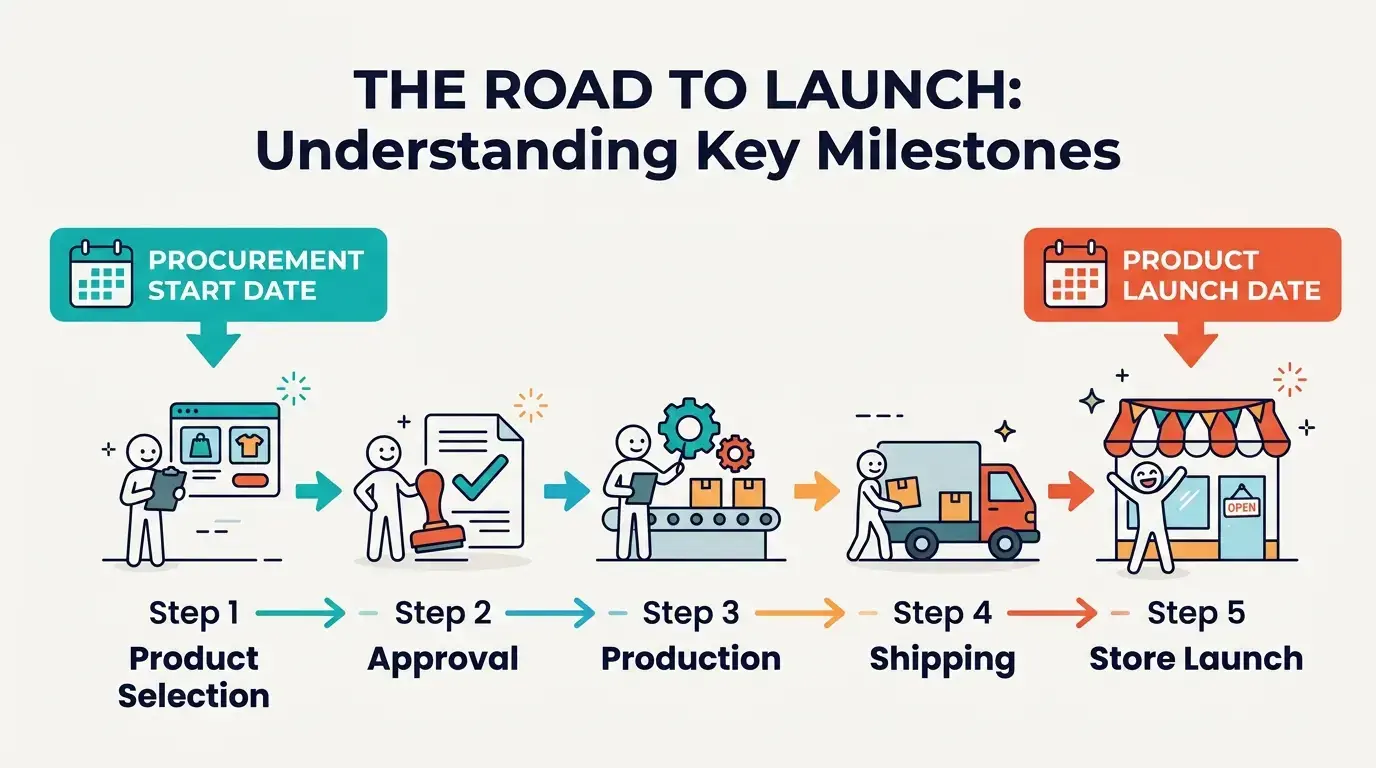
These stages do not always happen strictly one after another. Some preparations can overlap, but unresolved approvals or delayed shipments can affect the entire schedule.
Existing wholesale products may require less preparation than customized products involving new packaging or sample revisions. Therefore, a quoted production completion date should not be mistaken for the date goods will arrive at your warehouse.
In our Christmas toy gift box sourcing project, we worked with a European corporate gift buyer to confirm samples, establish production checkpoints, and coordinate inspection and delivery against an agreed schedule.
The project illustrates why clear approvals and realistic delivery planning matter when products must arrive for a specific occasion.
For any new toy product launch, include enough time to prepare listings, promotions, and retail displays after the shipment arrives.
When You Should Wait Before Adding More Toys
Expanding your product range is not always the right decision. Sometimes improving your existing assortment offers a better use of inventory space and purchasing budget.
Consider delaying new product introductions when:
- Existing inventory is moving slowly. Additional products may increase storage costs without resolving weak demand.
- New products overlap with current SKUs. Similar toys at similar prices may divide sales rather than attract new customers.
- Your purchasing budget is limited. Adding more stock can reduce the funds available to replenish proven sellers.
- The selling window is too close. Seasonal toys arriving after peak demand may require discounts to clear.
For example, if a retailer already holds substantial inventory of similar RC cars, introducing another model with nearly identical features may not create meaningful additional demand.
Reviewing the current assortment, improving product presentation, or reducing slow-moving stock may be more appropriate.
More products do not automatically mean a better product range. Every new SKU should have a clear role in the assortment.
Test New Toys Before Expanding Your Range
When demand for a new product is uncertain, testing can provide useful information before a larger inventory commitment.
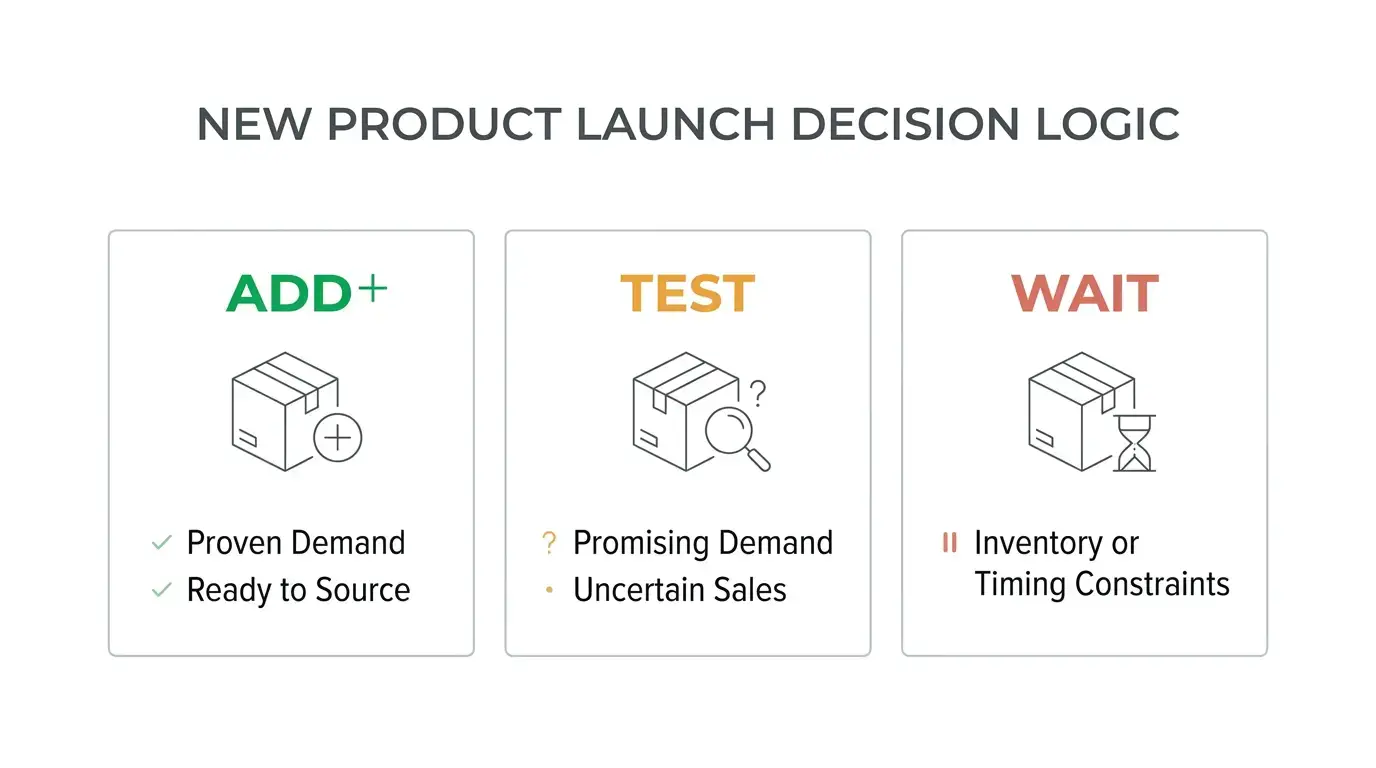
A practical approach is to classify potential additions into three decisions:
| Decision | When It Makes Sense | Recommended Action |
|---|---|---|
| Add | Customer demand is supported, the product fills a genuine gap, and sourcing conditions are suitable. | Introduce the product as part of the planned assortment. |
| Test | Customer interest exists, but sales potential remains uncertain. | Trial a limited assortment or order quantity where feasible. |
| Wait | Inventory, budget, or delivery timing creates excessive risk. | Resolve the constraints and reassess later. |
For a trial product, monitor sales performance, customer feedback, returns, and actual gross margin.
Compare these results with the expectations set before launch. A product that sells quickly but generates frequent returns or high servicing costs may not justify expansion.
Trial order quantities also depend on the product and supplier. Buyers should confirm minimum order quantities and availability rather than assume every toy can be purchased in small batches.
The purpose of testing is to make the next purchasing decision with better evidence.
Planning Your Next Toy Range Update with Chengji
We understand that adding new toys is not simply about choosing products from a catalog. Buyers also need to consider their target customers, existing assortment, packaging requirements, and the timing of their next sales window.
At Chengji Toys, we help buyers explore suitable product options, communicate requirements with partner factories, and coordinate sampling, order progress, and shipment preparation according to each project’s needs.
Whether you’re expanding an existing category or exploring something new, you can browse our wholesale toy product range and share your target market, preferred product categories, and planned launch date with our team.
We can then discuss suitable sourcing options and the practical steps needed to move your plans forward.
Conclusion
The best time to add new toys is when customer demand, inventory readiness, and sourcing timelines align.
Rather than following a fixed launch schedule, review your assortment regularly, plan ahead for seasonal demand, and test unfamiliar products where appropriate.
A well-timed product introduction is not simply about offering something new. It is about bringing the right products to customers when they are ready to buy.