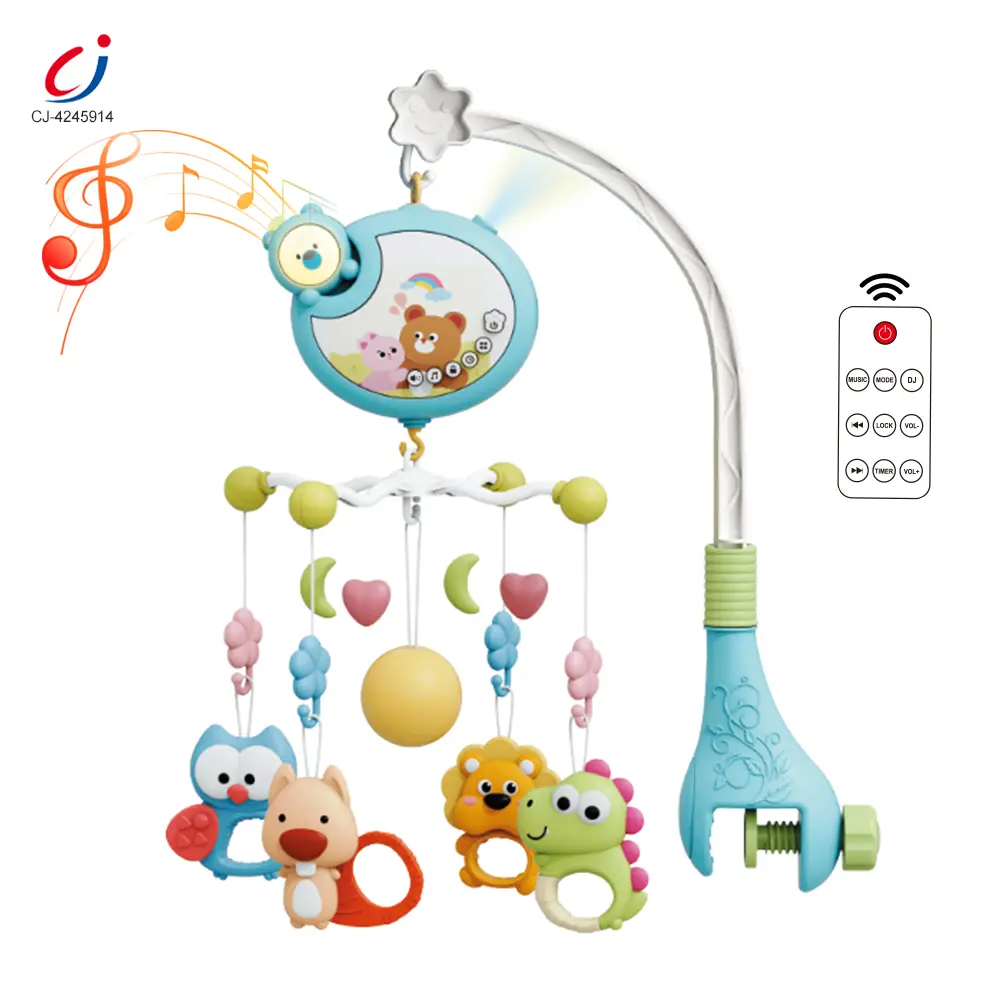
Motion is magic to a child’s brain. A small car racing along a loop or a marble tracing a spiral may look simple, but these moving paths trigger sensory, cognitive, and emotional responses that make Spielzeugbahn play deeply engaging for children.
Als wholesale track toy supplier, this article of Chengji’s breaks down the psychology behind that attraction, explains the core theory (motion-tracking / predictive processing), and shows how designers, parents, and sellers can use those insights to create more engaging, developmentally rich play.
Motion-Tracking Theory — The Brain’s Love of A Path
At the heart of motion play is what we can call motion-tracking theory (a practical, child-focused framing of predictive processing and visual tracking). Key ideas:
- Humans — including very young children — are wired to follow moving objects. The visual system excels at detecting continuous trajectories and predicting where an object will go next.
- The brain rewards accurate prediction. When a child anticipates a car’s path and the car follows it, the brain releases small rewards that reinforce attention and enjoyment.
- Continuous, smooth motion (loops, ramps, curves) creates a satisfying sequence for the visual system to lock onto — that’s why Bahnspielzeug with clear, visible routes feel so compelling.
Put simply: motion + predictability = sustained attention.
Sensory Pleasure and Rhythm: Why Movement Calms and Focuses
Motion play delivers multisensory input — sight, sound, vibration. This combination has several effects:
- Sensory regulation. Smooth, repetitive motion (a car looping around a track) provides rhythmic feedback similar to rocking or swinging, which can calm and center children.
- Multisensory immersion. Lights, engine sounds, and tactile handling amplify engagement and help children stay focused longer than with static toys.
- Low-effort, high-reward loop. A small action (pressing a launcher, pushing a car) leads to a noticeable outcome (a long run). That action–outcome loop produces quick satisfaction and encourages repetition.
These sensory and rhythm factors explain why even toddlers can watch and replay a single run dozens of times.

Cause-and-Effect Learning — Motion Makes Physics Visible
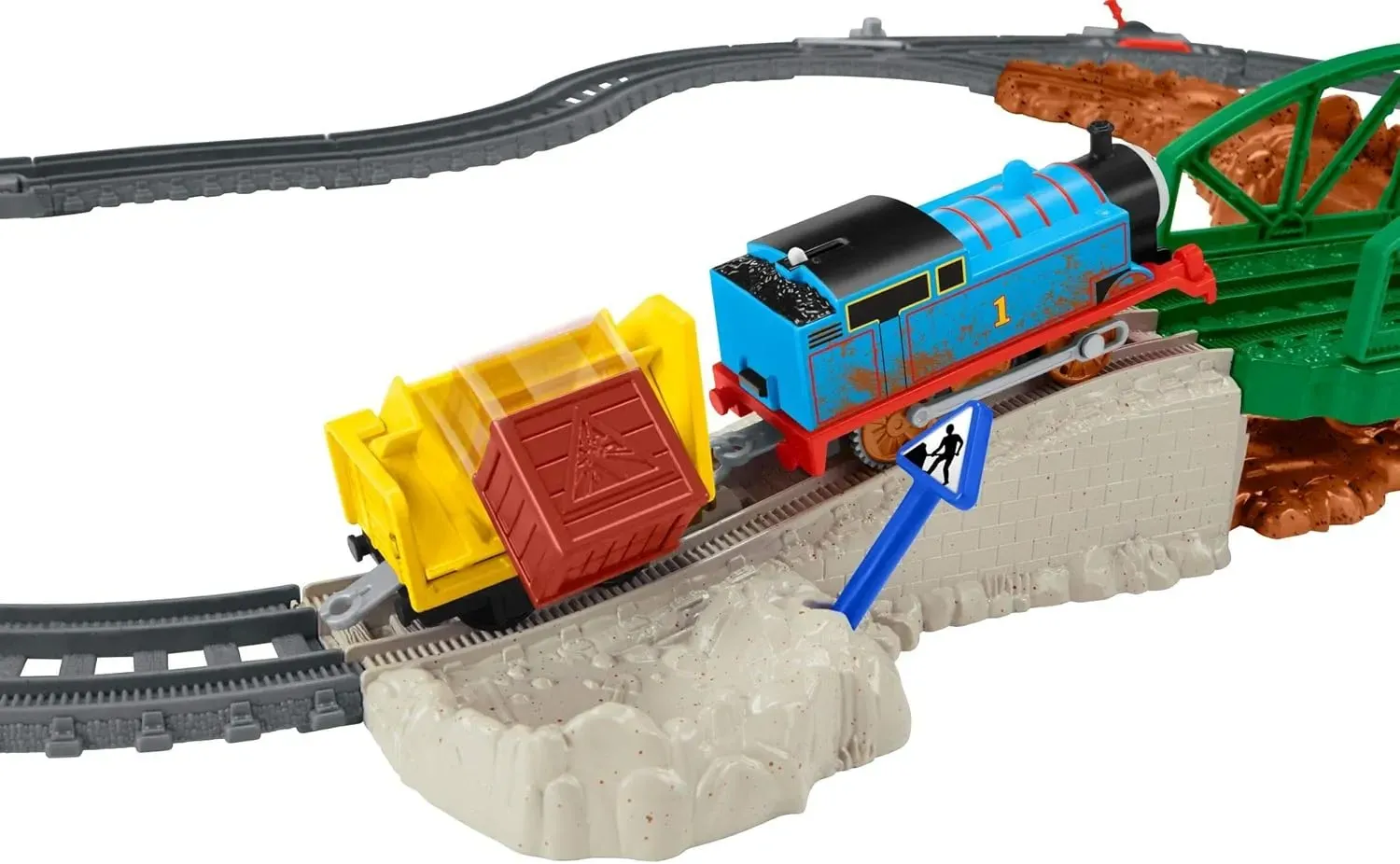
One reason educators love Bahnspielzeug is that they externalize physical laws:
- Slope = speed.
- Curve radius = centrifugal force (derail risk).
- Weight and friction change momentum.
Children don’t need formal instruction to notice these relationships. By tweaking track elements and observing the result, they learn cause-and-effect in a direct, embodied way. This hands-on discovery is more memorable and intuitive than verbal explanations.
Emotional Hooks: Completion, Mastery, and Social Reward
Several emotional mechanics keep kids coming back:
- Completion satisfaction. Watching a car finish a lap satisfies the brain’s preference for closed loops and completed goals.
- Mastery and competence. Solving a tricky section or successfully building a loop gives a clear sense of achievement.
- Social rewards. Shared runs, cheering, and collaborative troubleshooting make Spielzeugbahn play highly social. Group success multiplies the reward.
These emotional reinforcements combine to produce both intrinsic motivation (fun) and extrinsic motivators (praise, applause).
Developmental Benefits Rooted in Motion Psychology
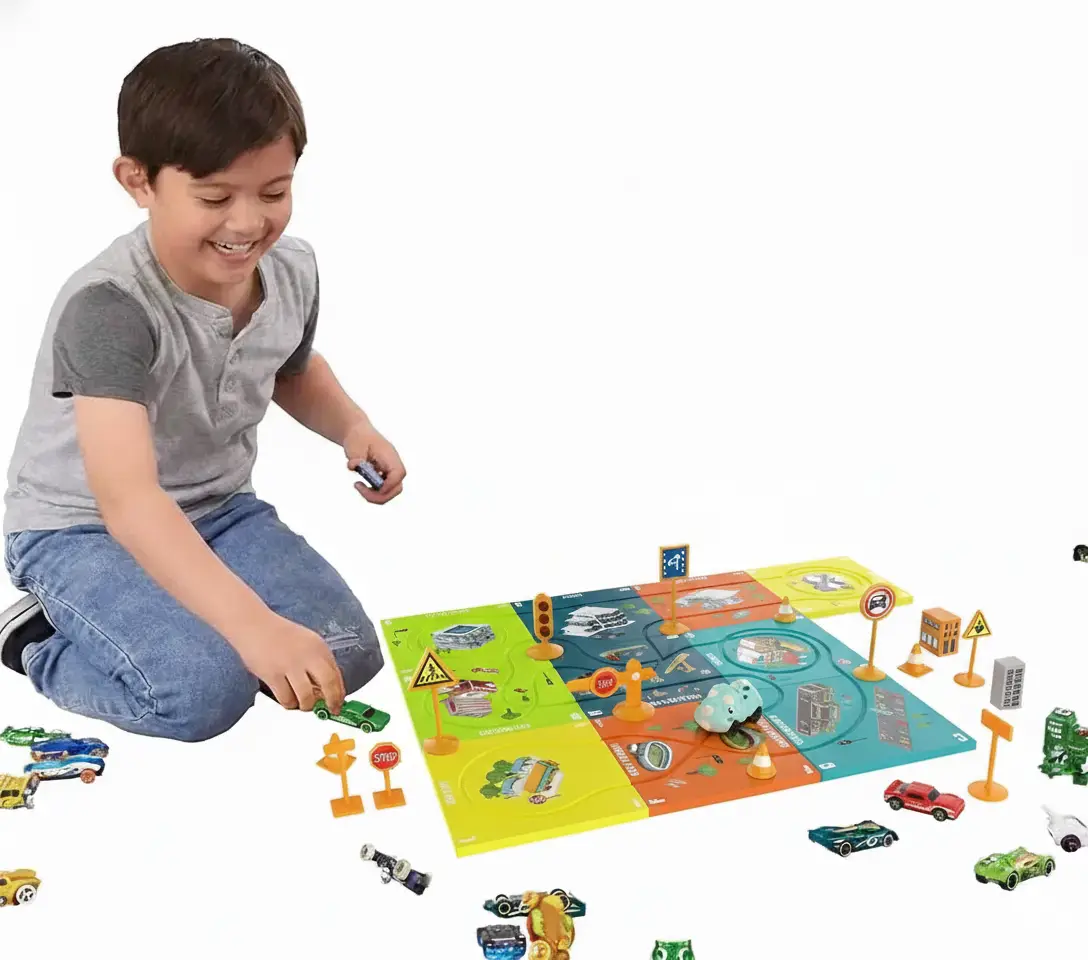
Motion-based play supports a range of developmental outcomes:
- Attention & focus: Continuous movement trains visual tracking and sustained attention.
- Spatial reasoning: Planning track layouts builds mental rotation and mapping skills.
- Problem-solving: Iterative testing fosters analytical thinking and resilience.
- Fine & gross motor skills: Assembling small pieces and moving larger modules practice coordination.
For educators, track toys are compact STEM tools: kids experiment with energy, force, and geometry while playing.
Design Implications: Make Motion Intuitive and Rewarding
If you design or source Spielzeugbahns, use motion psychology to guide product choices:
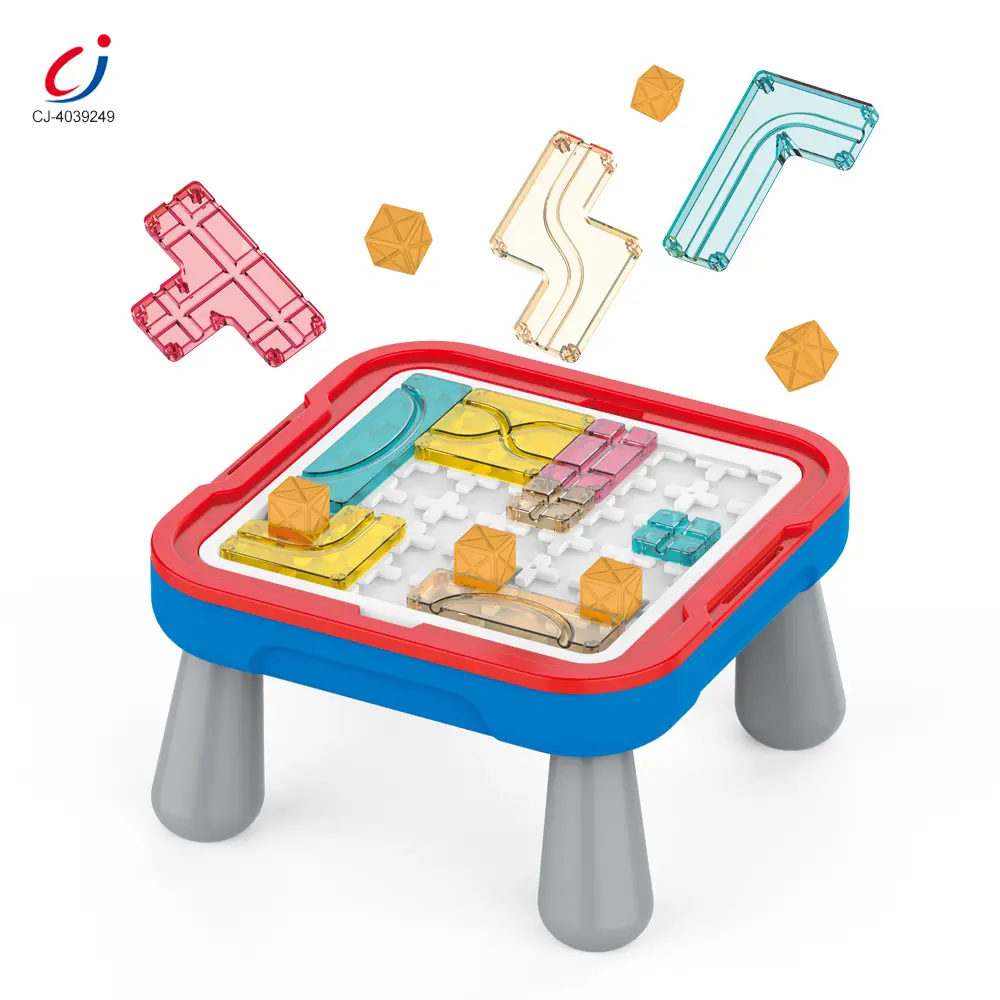
- Visible, continuous routes: Make the path obvious so children can predict and follow it. Transparent loops or open ramps help.
- Smooth sensory feedback: Add gentle sounds or tactile effects (soft rumble strips) to enhance immersion — but avoid overstimulation.
- Immediate cause-and-effect controls: Launchers, adjustable ramps, and weights let kids test variables quickly.
- Scalable complexity: Starter kits for toddlers, expansion packs for older kids — maintain the motion core while increasing challenge.
- Modularity & repairability: Interchangeable pieces encourage iteration and reduce frustration from damaged parts.
These features keep children engaged longer and make sets more valuable for classrooms and families.
Marketing & Retail Angles that Resonate with Parents
When communicating to buyers, frame track toys with motion psychology in mind:
- “Build attention and focus through hands-on motion play.”
- “Teaches basic physics by doing, not lecturing.”
- “Perfect for groups — encourages turn-taking and cooperative problem-solving.”
- Use short demo videos showing a car’s run from different angles — motion sells better than static images.
Demo zones in stores (live build tables) are especially effective because they let shoppers experience the motion-driven enchantment firsthand.
Practical Tips for Parents and Educators
- Start with short sessions and let children repeat runs; repetition is the learning engine.
- Ask predictive questions: “What will happen if you add another ramp?” — This primes hypothesis testing.
- Encourage one change at a time so kids learn variable isolation.
- Offer expansion pieces gradually to keep challenges in the “stretch” zone.
Little scaffolding turns natural fascination into deeper learning without killing the fun.

Schlussfolgerung
Kids are drawn to Spielzeugbahns because motion satisfies deep cognitive and sensory cravings: the visual system’s love of continuous paths, the brain’s reward for accurate prediction, and the emotional payoff of completing a loop. When designers, parents, and retailers recognize this psychology, they can create better toys, richer learning moments, and more compelling shopping experiences.
Ein gut durchdachtes Spielzeugbahn leverages these truths to make play that’s irresistible and developmentally meaningful.
Chengji – A Reliable Track Toy Supplier

Chengji stands out as a wholesale track toy supplier, supporting global buyers with wholesale track toy sets supply and flexible individuelle Spielzeuglösung options. Our production facility operates under strict international child-safety regulations, ensuring every toy meets the required mechanical, chemical, and durability standards.
Since track toy sets are reckoned as STEM toys, we also develop a wide range of educational toys wholesale, giving sourcing teams more room to build diversified product lines. With reliable quality control and a service mindset centered on long-term cooperation, Chengji remains a trustworthy partner for brands and retailers seeking safe, creative, and market-ready toys.