For many toy brands, sustainability still sounds expensive. But the truth is that eco-friendly materials are not automatically high-cost materials, and the real answer depends on resin choice, processing efficiency, product structure, and production scale.
As a top toy supplier from China, Chengji concludes that the real question is which material gives the best cost-performance balance. In that framework, wheat straw composite stands out as a practical entry point for sustainable toy manufacturing.
Is Sustainability Always More Expensive?
The short answer is no. Specifically speaking, the cost depends on the material system, not the label. Some eco materials are expensive because they require special tooling, complex finishing, or limited supply chains. Others, like wheat straw composite, can work with standard injection molding and support efficient mass production.
Pour toy brands, a material that sounds premium but breaks the budget is not a strategic solution. A material that keeps costs controlled while supporting a sustainability story is.
Sustainability does not have to mean higher cost. Compared to conventional ABS plastic, wheat straw composites introduce a hybrid material approach that balances cost and environmental impact. By partially substituting virgin resin with agricultural fibers, they can offer moderate material savings while maintaining compatibility with existing manufacturing processes.
What Are You Actually Comparing?
This debate is not really “plastic versus eco material.” It is ABS plastic versus a hybrid material system.
ABS plastic is the industry standard for a reason. It is petroleum-based, stable, easy to mold, and widely used across toy manufacturing. Suppliers understand it, factories know how to process it, and quality is predictable.
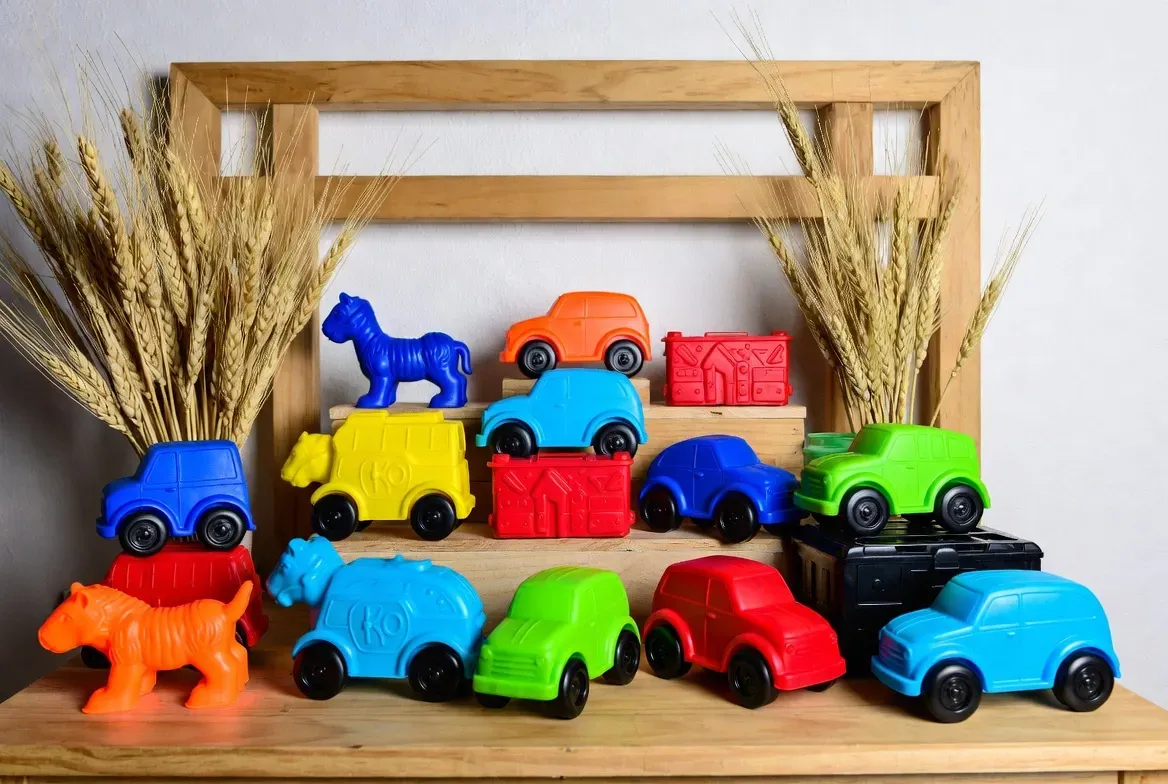
Wheat straw composite is different. It combines agricultural by-product fiber with polymers, reducing dependence on virgin plastic while keeping the material usable for molded parts. It is not a perfect replacement for every application, but it is a strong candidate for many non-load-bearing toy components.
The comparison should be framed as pure plastic efficiency versus hybrid material optimization. ABS remains excellent for precision parts, but wheat straw composite can reduce resin dependence in casings, accessories, and decorative components. This makes wheat straw plastic a cost-control material, not just an eco label.
Raw Material Cost Comparison
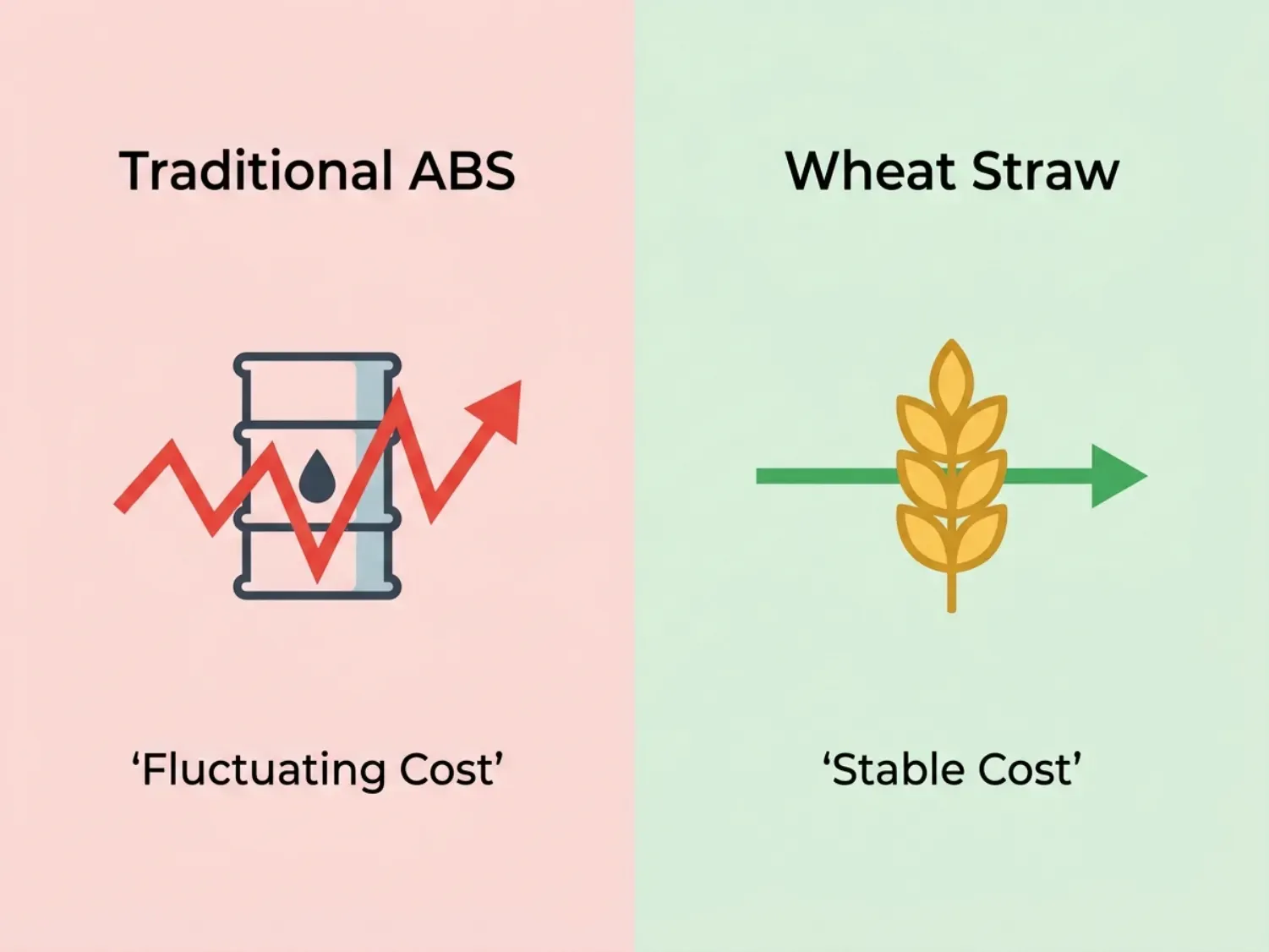
ABS pricing is tied to petrochemical markets, so it can rise and fall with oil-related fluctuations. That creates uncertainty for toy brands that need stable procurement planning. Wheat straw, by contrast, uses a low-cost agricultural by-product that is more abundant and less exposed to fossil-fuel volatility.
The key advantage is that the filler portion reduces the total cost per unit. This is especially useful in wholesale toy orders and high-volume production, where even a small per-unit saving becomes meaningful across large orders.
In bulk plastic toy supply, raw material savings become more important as volume rises. A 5-cent difference per unit may seem minor, but across tens of thousands of pieces, it changes margin structure materially. Since the price of the ABS plastic fluctuates with petrochemical markets, this is why wheat straw plastic becomes more attractive as scale increases.
Toy Processing and Manufacturing Costs
ABS is easy for factories because the process is already highly optimized. Injection molding is mature, stable, and predictable. That means lower setup friction and fewer surprises.
Wheat straw composite requires more adjustment. The material must be blended properly, moisture must be controlled, and the process may need tuning before output becomes consistent. This means the initial setup can be more complex.
But once production stabilizes, unit cost often improves. In many cases, the first run is more expensive than the tenth run. Factories that understand the material can bring down defect rates and make the line efficient.
Shifting to wheat straw plastic in toy manufacturing, the first production cycle may cost more, but stable manufacturing reduces long-term unit cost. Once compounding and molding parameters are locked, a factory can produce repeatable parts without major extra overhead. Wheat straw composite rewards toy brands with controllable costs and a sustainable reputation, which matters for serious toy brands.
Wheat Straw Plastic Vs ABS Plastic: Performance and Trade-offs
ABS generally wins on strength, precision, and durability. It delivers sharper finishes and stronger structural consistency. That is why it remains the default for many toy parts.
Wheat straw material may show slightly lower mechanical performance depending on the formula and supplier. That does not make them poor materials. It means they should be used strategically.
The right question is not whether all components should switch. It is whether every part needs maximum structural performance. For many toy applications, the answer is no.
| Aspect | ABS Plastic | Wheat Straw Composite | Trade-off |
|---|---|---|---|
| Strength & Impact | High, suitable for stress parts | Moderate, not for heavy load | Use ABS where stress exists |
| Precision | High, tight tolerances | Lower, less consistent | Keep ABS for precision parts |
| Surface Finish | Smooth, premium | Slightly textured | Affects appearance-sensitive products |
In toy manufacturing, not every component deserves premium plastic. For example, outer shells, battery covers, and decorative elements in toys can use wheat straw composite, while functional parts like gears, snap-fit connectors, and load-bearing joints should remain ABS. This targeted material allocation reduces cost without affecting the toy’s safety, durability, or play performance.
Market and Pricing Advantage of Wheat Straw Plastic Material
Consumers increasingly respond well to eco-friendly packaging and sustainable claims. Retailers also want greener SKUs because they help with shelf positioning and brand image.
Pour toy brands, that creates pricing leverage. A product that looks sustainable and is backed by a credible material story can often command a higher perceived value without a dramatic increase in cost.
Sustainability can support margin preservation by strengthening product positioning. For example, a toy using wheat straw composite can be marketed as an eco-friendly alternative, making it less directly comparable to standard ABS products. This reduces price pressure and helps maintain margins without relying purely on cost reduction.
When Wheat Straw Plastic Is Not the Right Choice
Wheat straw composite is not the right solution for everything. High-load structural parts, premium products demanding flawless surface finish, and ultra-precision molded components may still be better in ABS plastic.
That is not a weakness. It simply means wheat straw should be used selectively.
selective use beats blind substitution. A toy shell may work well in a wheat straw composite, while internal moving parts stay in ABS to maintain performance. The best strategy to cope with the material change in the toy industry is a hybrid design, not a full replacement.
Strategic Recommendation for Toy Brands
The smartest approach is partial replacement. Start with non-load-bearing parts, casings, and visible outer components. Keep ABS where performance matters most.
This hybrid strategy helps toy brands maintain product quality while introducing sustainable toy materials into the line, which boosts the brand’s reputation.
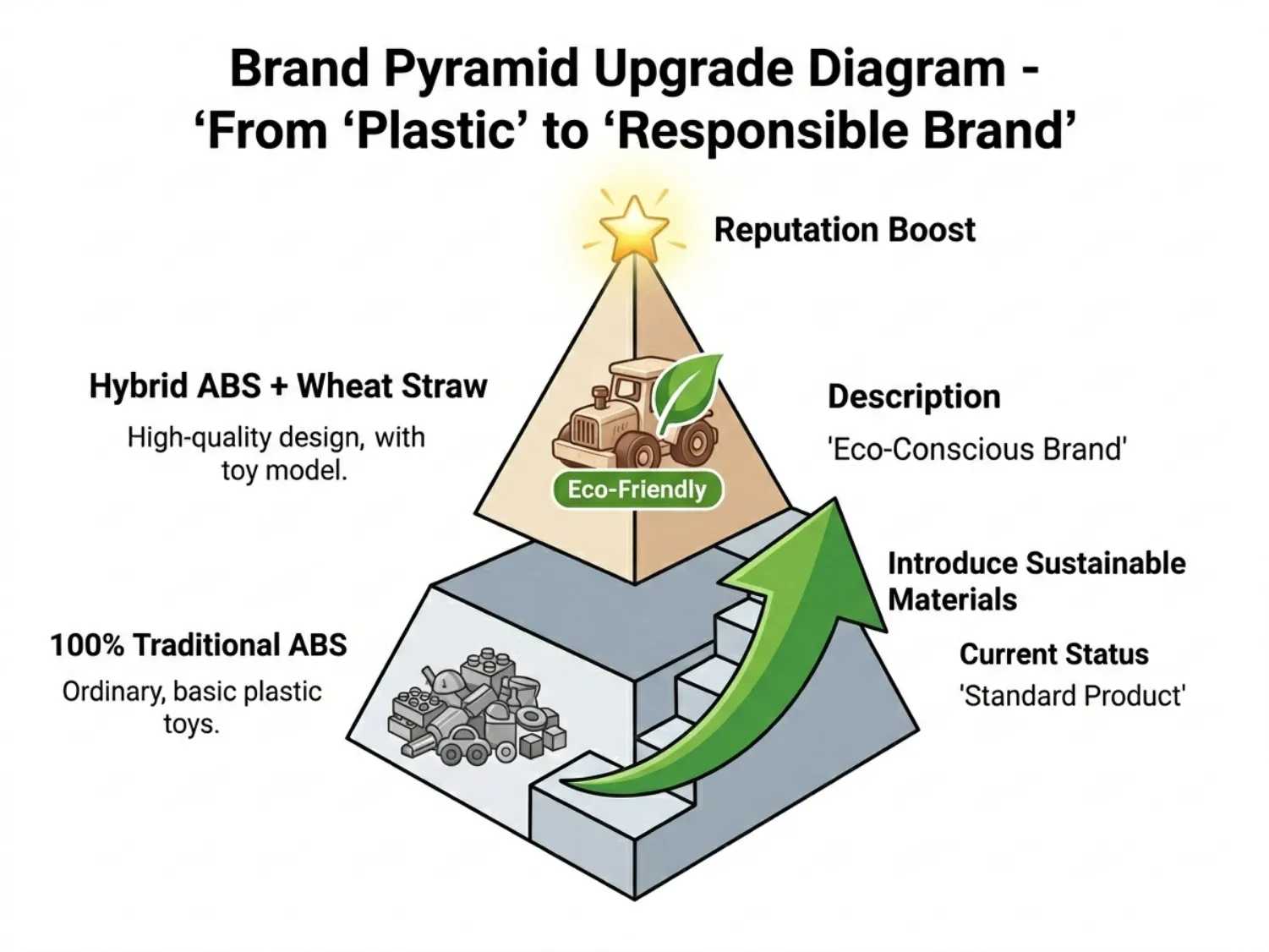
Conclusion: Cost Is a Design Decision, Not Just a Material Choice
Sustainability does not automatically mean higher cost. Wheat straw composite proves that eco materials can be commercially practical, scalable, and margin-friendly when used correctly. It is not just an environmental option; it is a cost engineering tool for modern toy brands.
For companies comparing ABS plastic with wheat straw plastic, the answer is clear: the best choice is not the one with the highest purity or the strongest marketing story. It is the one that delivers the right balance of cost, performance, and market value.