In the world of educational toys, parents often fall into the “super-size” trap. The common misconception is simple: “More magnetic block pieces equals a better toy.” However, as a premier fournisseur de jouets who has analyzed industrial design and child development patterns, Chengji can tell you that the utility of a bloc magnétique isn’t measured by piece volume alone, but by its contribution to the “Flow State” of play.
Choosing the wrong set size can lead to two extremes: a child feeling frustrated by a lack of resources, or a child feeling overwhelmed by a chaotic mountain of plastic. The “right” number is a moving target—it depends on age, motor skill maturity, and whether the child is a “solo architect” or a “social builder.”
How Kids Actually Use Magnetic Blocks
Adults imagine children building a cathedral and leaving it on display. In reality, industrial play patterns show that kids engage in a cycle of build-test-destroy-repeat.
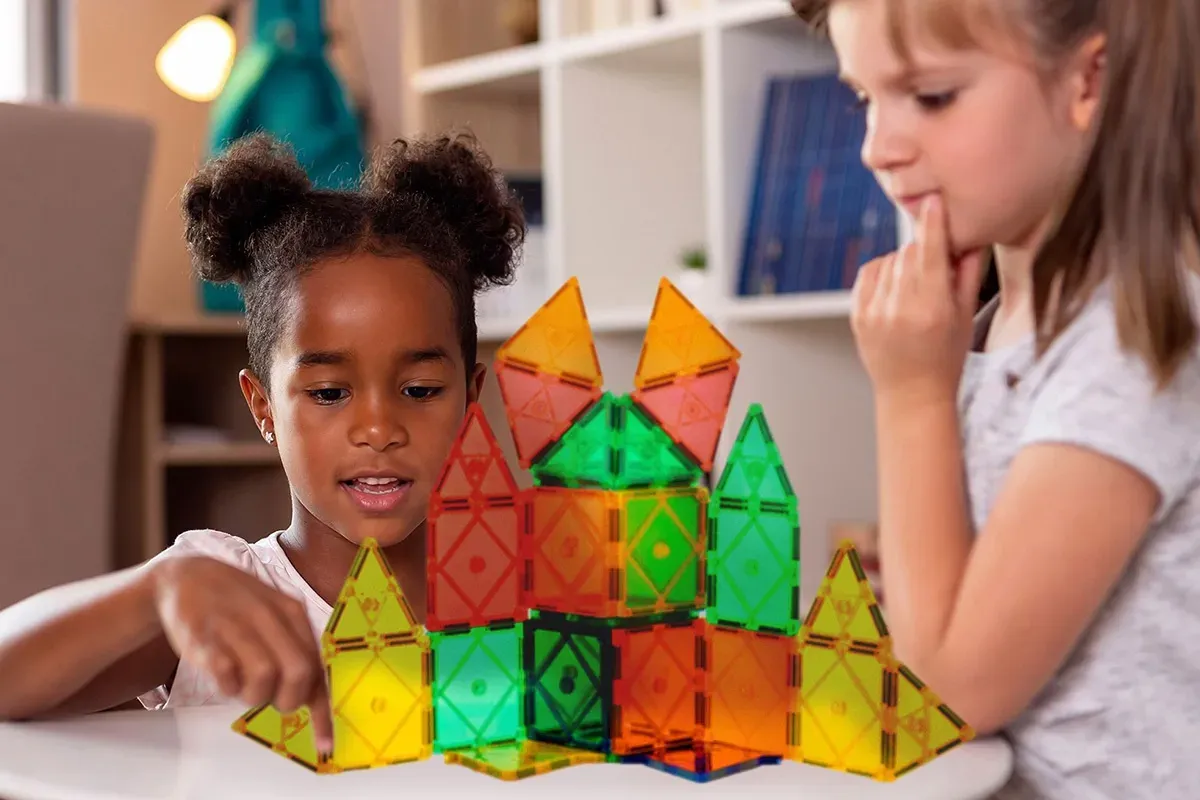
Early-stage building blocks play is about sensory feedback—the “click” of a magnetic block piece connecting to another. At this stage, a massive 200-piece set is actually a hindrance. It creates “choice paralysis,” where the child spends more time digging through a bin than actually discovering the properties of magnetism and geometry.
Age-Based Recommendations: The Golden Piece References
To help you navigate the market, I’ve broken down the ideal magnetic block piece count based on developmental milestones:
| Age Group | Recommended Piece Count | Primary Focus |
| Ages 3–4 | 30–60 Pieces | Sensory play, basic stacking, and color recognition. |
| Ages 4–6 | 60–100 Pieces | 3D modeling, simple houses, and vehicle builds. |
| Ages 6–8 | 100–200 Pieces | Engineering logic, symmetry, and complex themes. |
| Ages 9+ | 200+ Pieces | Collaborative “city-building” and modular systems. |
- Ages 2–3: Focus on large squares and triangles. A small magnetic block piece count ensures they can master the “attractive force” without being buried in clutter.
- Ages 4–5: This is the “Golden Era” of 3D construction. They need enough pieces to build a complete enclosure, like a garage for a toy car.
- Ages 6–8: This stage requires variety. If every magnetic block piece is just a square, the child’s architectural evolution will plateau.
Chengji won’t recommend kids under 3 to play with magnetic blocks because this will expose kids to the risk of swallowing tiny parts of the toy, causing unnecessary emergency.
Piece Count vs. Play Value: The Shape Diversity Factor
From a manufacturing perspective, not every magnetic block piece is created equal. I often see “150-piece sets” that are 80% small triangles. This is a cost-cutting tactic.
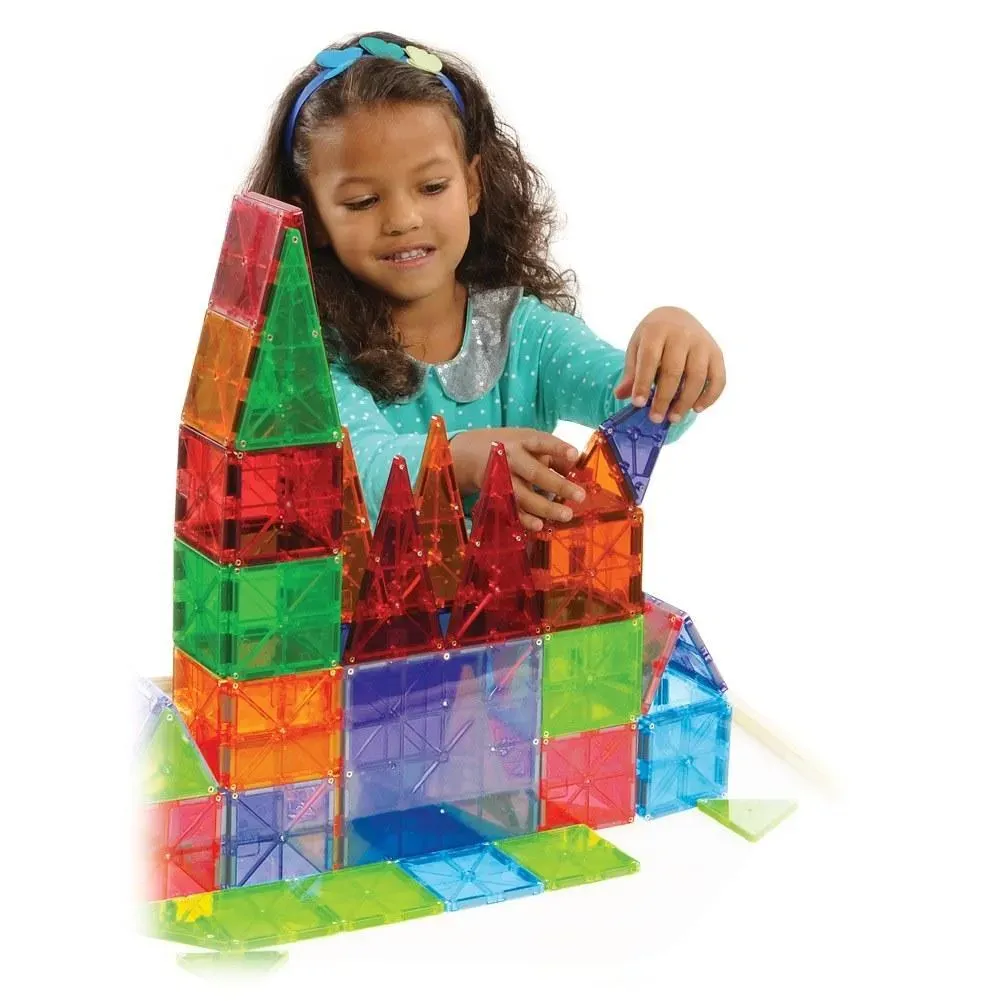
A high-value set should prioritize Shape Diversity. Sixty pieces that include large base plates, isosceles triangles, and arched window frames offer significantly more play value than 150 basic squares. When evaluating a set, look for the “functional variety” rather than the gross weight of the box.
Single-Child Play vs. Shared Play Sets
If you have siblings, the math changes. Industrial observation of “collaborative play” suggests that conflict arises when there is a scarcity of “hero pieces”—the wheels, the tall towers, or the large base plates.
For a solo child, a 60-count magnetic block piece set allows for deep, focused immersion. For two or more children, you need to jump to at least 120 pieces to ensure each “engineer” has enough material to build their own structure without a territorial dispute over the last hexagon.
Storage, Cleanup, and the Reality of “Toy Fatigue”
Here is a truth from the world of home ergonomics: piece count is directly proportional to cleanup friction.
An overwhelming number of pieces often end up in a “dead zone” at the bottom of a toy chest. To avoid “toy fatigue,” I recommend a modular storage approach. If you buy a large set, don’t dump every magnetic block piece onto the floor at once. Introduce them in stages to keep the novelty alive.
Buying Strategy: Start Small, Expand Smart
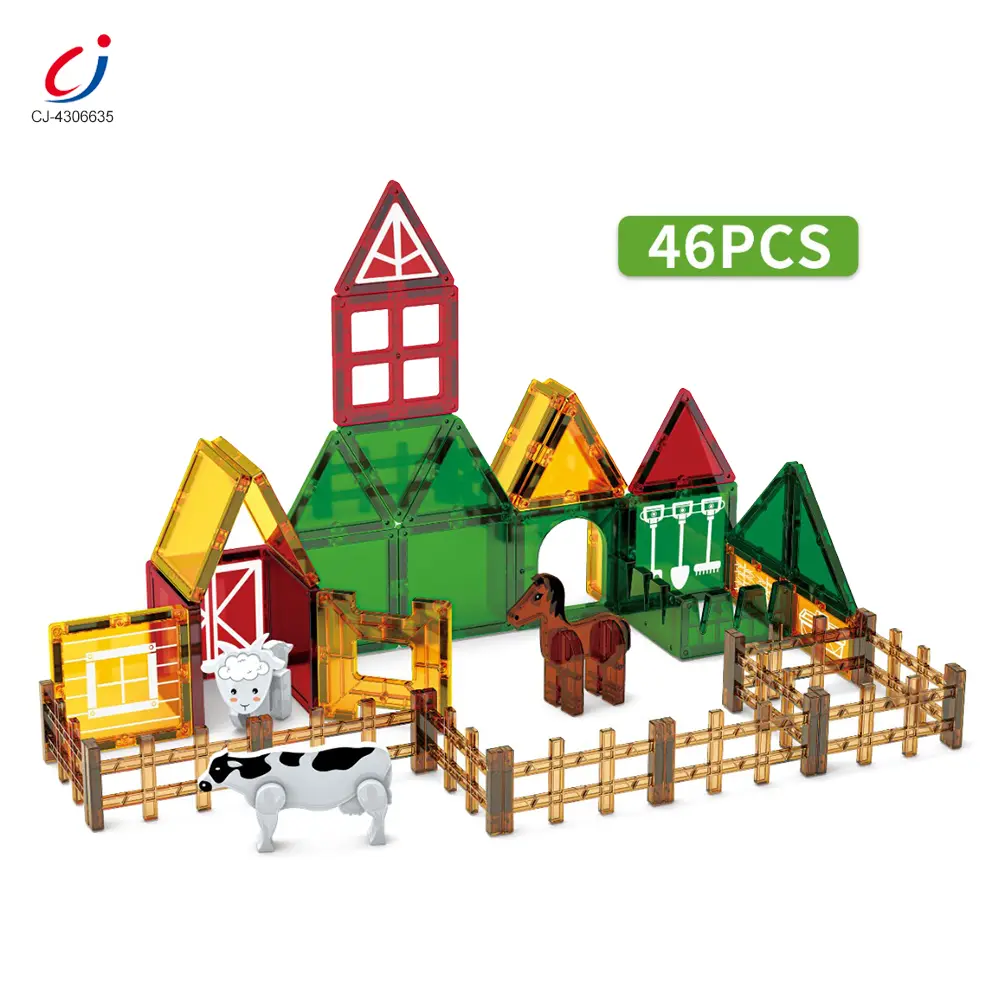
The most cost-effective way to build a collection is the Modular Expansion Strategy. Magnetic blocks are an investment. Instead of buying a massive, low-quality set from an unknown brand, start with a high-quality 40-piece starter set from a reputable manufacturer.
High-quality brands use superior ultrasonic welding to keep the magnets safely encased. As the child’s skills grow, you can add “Expansion Packs”—such as tracks, forest themes, or glitter sets. This ensures every new magnetic block piece adds a new layer of complexity to their existing world.
Conclusion: The Right Number Grows With the Child
There is no universal “perfect” number, but there is a “perfect for right now.” The beauty of a well-made magnetic block piece is its longevity. Unlike toys that have a fixed purpose, these blocks evolve.
Start with a manageable count that matches your child’s current fine motor skills, and expand only when you see them reaching the limits of their current inventory. Thoughtful selection leads to sustained engagement, turning a simple toy into a lifelong foundation for engineering and creativity.
À propos de Chengji
Chengji is a reliable fournisseur de jouets from China. We focused on stable, high-quality supply for global B2B partners. We specialize in magnetic building block toys designed for creativity, STEM play, and durability, with consistent batch output and safety-tested materials.
Our custom toy sulotion include tailored set designs, brand packaging, age-range specification, and certification support, helping retailers and licensors bring engaging magnetic construction products to market with predictable lead times and reliable performance.
FAQ: Common Mistakes When Buying a Magnetic Bolck Set
Q1: Is buying more magnetic block pieces always better?
A1:No. Quantity means nothing if magnet strength is weak. Sets with poor magnetic force cannot support tall or complex builds, causing structures to collapse and frustrating children quickly.
Q2: How can I tell if magnetic block pieces has weak magnets?
A2: Check whether the supplier specifies magnet grade, pull strength, or stacking height tests. If this data is missing, the risk of weak magnets is high.
Q3: What does “filler pieces” mean in magnetic block sets?
A3: Some “100-piece” sets include a large number of non-magnetic plastic inserts. These pieces add count but contribute little to construction value.
Q4: Is buying a large set for toddlers safer in the long run?
A4: No. A 200-piece set for a toddler does not improve safety—it increases clutter and reduces focus. Age-appropriate set size is safer and delivers better play value