Eco-friendly baby products are growing fast, but that growth also creates a problem: many parents and bulk toy buyers do not know whether a new material is genuinely safe or just marketed that way. A wheat straw plastic toy is often promoted as a greener alternative, but “green” does not automatically mean “safe.” The real question is simpler and more useful: does the product meet children’s product safety requirements, and is it manufactured with enough consistency to be trusted?
として おもちゃ サプライヤー から 中国, Chengji will answer this question, combining BPA-Free and FDA Compliance, from the perspective of a bulk toy supplier.
How is Wheat Straw Plastic Made
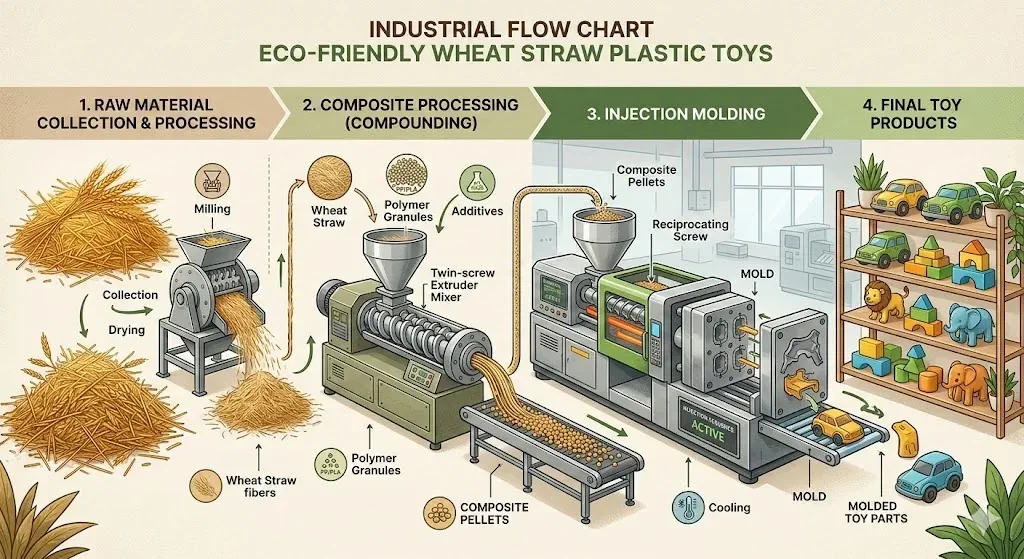
A wheat straw plastic toy is typically made from a biocomposite that combines processed wheat-straw fiber with a polymer binder, often polypropylene.
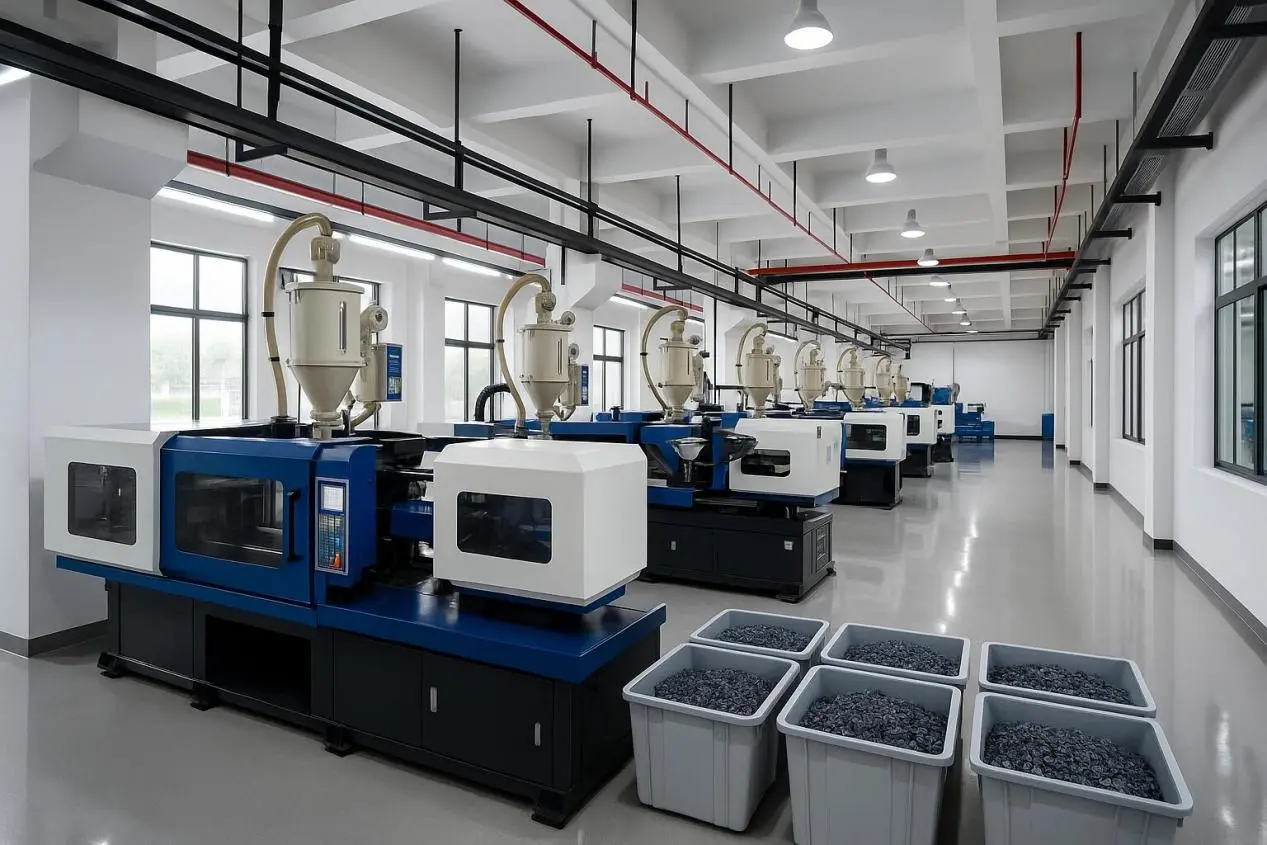
In practice, the straw is collected after harvest, cleaned, dried, ground into fiber or powder, and then blended with resin before being injection-molded into finished parts. Research on wheat-straw polypropylene composites shows that straw fibers can be compounded into thermoplastic materials for molded products, which is why the material can be used on standard injection equipment.
Now, wheat straw plastic toys have become a new toy trend in 2026, with a focus on sustainable toys.
Is Wheat Straw Plastic Safe for Babies?
The short answer is: it can be safe if it meets food-grade or children’s product standards.
The material name itself does not determine safety. What matters is the quality of the base polymer, the additives and colorants used, the consistency of manufacturing, and whether the finished product passes the relevant compliance tests.
FDA guidance makes clear that the regulatory status of a food-contact item depends on the status of each component and on migration evidence showing reasonable certainty of no harm.
For buyers and parents, that means the real issue is not “wheat straw” versus “plastic.” It is whether the finished wheat straw plastic toy has been produced with controlled materials and validated testing. A well-made product can be suitable for baby use; a poorly made one can be risky regardless of the material.

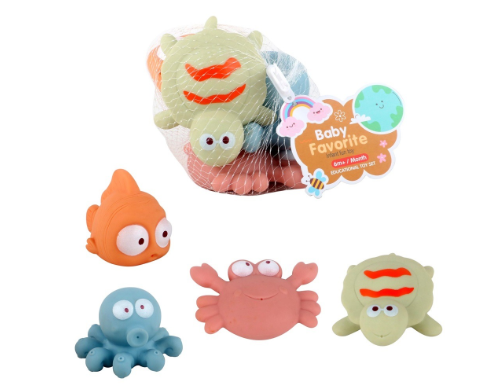
BPA-Free — What It Really Means (and What It Doesn’t)
BPA, or bisphenol A, has been a major consumer concern in baby products for years. FDA states that it no longer provides for the use of BPA-based polycarbonate resins in baby bottles and sippy cups, and it continues to review BPA science across approved food-contact uses. That is why “BPA-free” appears on so many products today.
But BPA-free does ない mean toxin-free. It only tells you one chemical is not present or not intentionally used. Other substances can still matter: additives, pigments, processing aids, and residues may affect safety if the product is made poorly. FDA’s food-contact framework focuses on the safety of the full formulation and on whether migration into food is acceptable.
So if a supplier says a wheat straw plastic toy is BPA-free, that is a starting point, not a conclusion.

FDA & International Compliance Explained
For kids under 3, it has 95% of possibility that they will put the wheat straw plastic toy into their mouth. Since then, it should meet food-contact safety requirements. The FDA expects evidence that the material is safe under intended use conditions, including migration testing and toxicological review.
In the European market, food-contact materials must also comply with strict safety rules, and EU authorities require that such materials do not endanger health or impair food’s taste or smell. German LFGB-related assessment is commonly used in practice for food-contact items sold in Europe.
For children’s products, like wheat straw plastic toys, or more broadly, U.S. toy safety rules also matter. CPSC guidance points buyers to ASTM F963 requirements, and CPSC’s magnet guidance shows how seriously magnet retention and separable magnet hazards are treated in toy safety enforcement. If your product contains magnetized or small components, it must be evaluated as a children’s item, not just as a food-contact item.
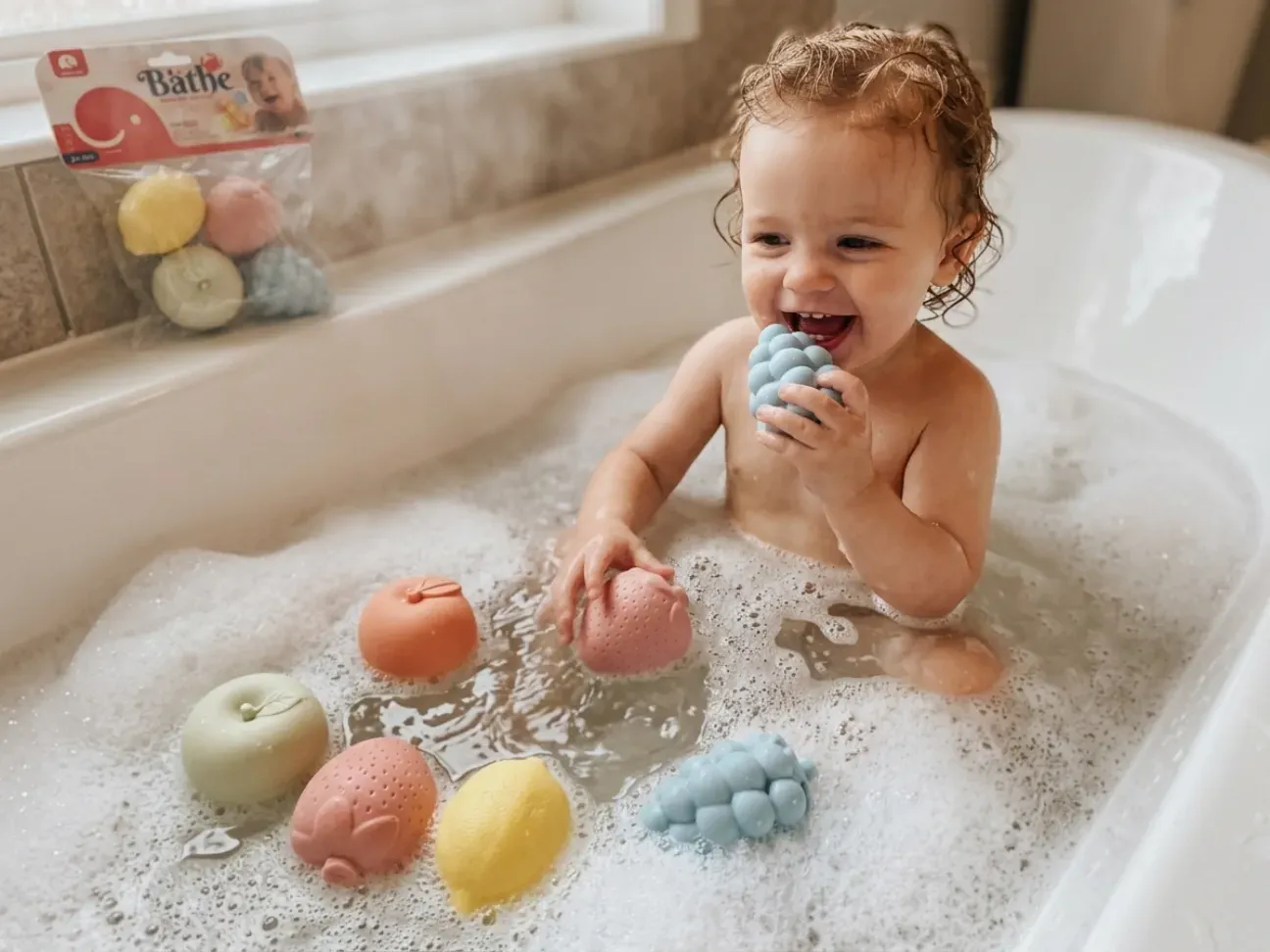
Wheat Straw Plastic vs Traditional Baby Materials
| Material | Safety | 耐久性 | Heat Resistance | Key Risk |
|---|---|---|---|---|
| Wheat Straw Plastic | Good if compliant | Medium | Medium | quality inconsistency |
| PP Plastic | High | High | High | low eco |
| Silicone | Very High | High | Very High | cost |
| Bamboo Fiber | Medium | Low–Medium | Low | cracking, additives |
How to Evaluate a Safe Wheat Straw Baby Product
Ask the supplier for batch-linked FDA or LFGB-related reports, a BPA-free material declaration, odor-free production samples, and heat-resistance data for the intended use.
Also, ask direct questions:
- What is the PP ratio?
- What additives are used?
- Can you provide migration test reports?
- Is it dishwasher-safe or microwave-safe?
A responsible wheat straw plastic toy supplier should answer these clearly and in writing.
Common Myths About Wheat Straw Plastic
- “It is 100% natural.” No, usually not.
- “It is biodegradable at home.” Usually no.
- “It is safer than all plastics.” Not automatically.
- “Eco-friendly means baby-safe.” False.
Do not confuse marketing language with proof.
When Wheat Straw Plastic Is a Good Choice — and When It Is Not
It can be a good choice for eco-positioned baby tableware, moderate-heat use, and cost-sensitive sustainable product lines.
It is not ideal for high-temperature sterilization needs, premium safety positioning where silicone is expected, or markets with strict documentation requirements that the supplier cannot meet.
In other words, the right product depends on the use case, not just the material story.
結論
A wheat straw plastic toy can be safe for babies, but it is not safe because of the name alone. BPA-free is a baseline, not a guarantee, and compliance is the real standard that matters. Buyers should judge the supplier’s testing, material control, and finished-product documentation before trusting any eco claim.
About Chengji – Your Reliable Toy Supplier
成吉思汗は China-based toy supplier focused on supporting B2B clients with safe, compliant, and market-ready products. We emphasize customer-oriented service, guiding buyers through material selection, safety standards, and product positioning. Chengji provides フレキシブルなOEM/ODM玩具サービス, covering product design, materials, and packaging, helping importers and brands develop customized toy solutions with consistent quality and reliable supply.
Wheat Straw Plastic Toy FAQ
Q1: Is wheat straw plastic toxic for babies?
A1: Not inherently, but toxicity risk depends on the finished product, not the label. Buyers should ask for migration reports and material declarations, because low-end suppliers may not control additives or resin quality well enough to prove safety.
Q2: Is it durable or easy to break?
A2: Compared with pure PP, some wheat-straw composites can feel slightly more brittle or less refined depending on formulation. That is why product testing matters: the same material category can perform very differently across suppliers.
Q3: Can it handle heat and sterilization?
A3: Heat resistance depends on the resin blend and the final product design. For baby items, buyers should verify whether the product is safe for hot food, dishwasher use, or repeated sterilization before making claims. FDA and EU food-contact rules both focus on intended-use conditions.
Q4: Does it affect smell or taste?
A4: Poorly made food-contact products can impair odor or taste, which is one reason EU food-contact rules explicitly address sensory neutrality. If a wheat straw plastic toy is intended to contact food, a strong odor is a warning sign, not a lifestyle feature.
Q5: Is it really biodegradable?
A5: Not always. Many wheat-straw products are composites, not pure plant material, so “biodegradable” claims can be misleading unless they are backed by specific testing and material composition data.
Q6: Why does quality vary so much between suppliers?
A6: Because the same product name can hide very different PP ratios, additives, compounding methods, and testing disciplines. In this category, supplier capability matters as much as material selection