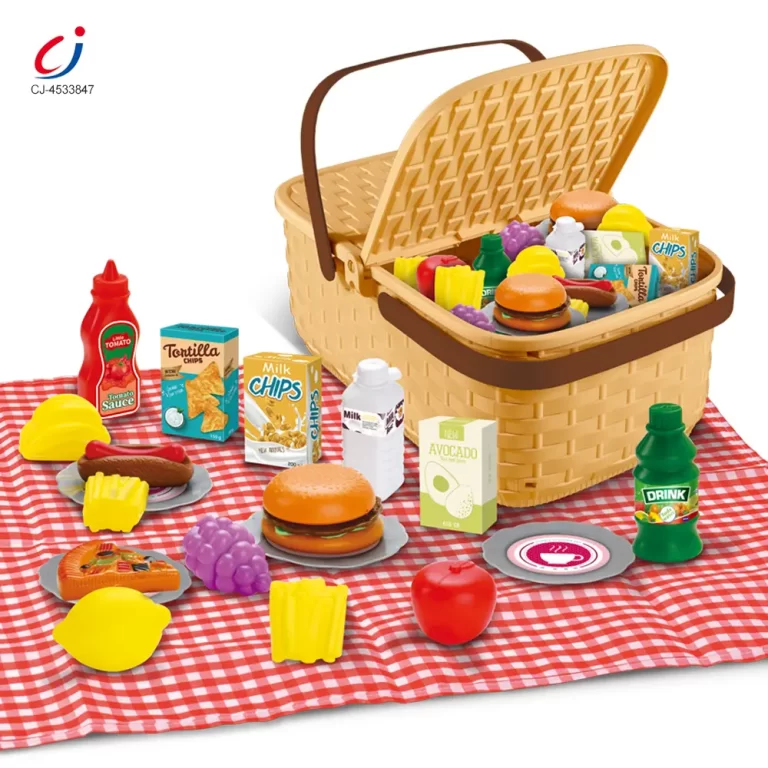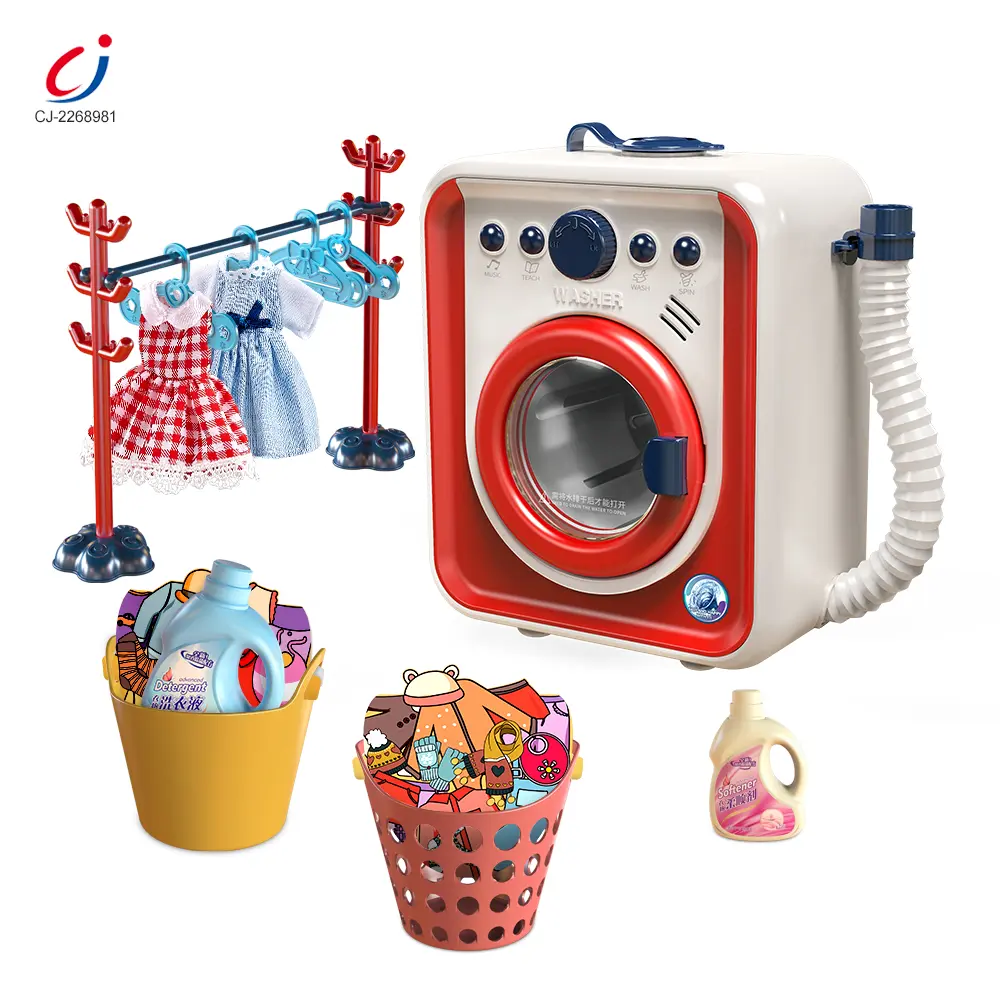
In the early stages of childhood, play is the primary “work” of the developing brain. While many parents focus on academic flashcards or digital learning apps, industrial research and developmental psychology suggest that the most powerful tool for language acquisition is often the simplest: the ままごと玩具. Whether it is a wooden kitchen set, a plastic doctor’s kit, or a simple set of action figures, these toys act as the building blocks for early communication and social intelligence.
として トップ・トイ・サプライヤー, 成吉思汗 will show you the science behind the pretend play toys for building kids’ communication skills.
The Connection Between Play and Language
The link between choosing the right ままごと玩具 and a child’s verbal output is profound. Communication is not just about memorizing vocabulary; it is about understanding context, tone, and social “pragmatics.” When a child engages in imaginative scenarios, they are forced to bridge the gap between their internal thoughts and the external world.
Statistics show that children who engage in regular, high-quality pretend play demonstrate more advanced sentence structures and a wider range of expressive language by age five. This is because a ままごと玩具 serves as a “prop” for a child’s first theatrical performance, where the script is their own burgeoning vocabulary.
The Role of Pretend Play in Early Communication
Early communication is a multi-dimensional skill involving verbal expression, non-verbal cues, and active listening.
- Vocabulary Expansion: Every ままごと玩具 introduces a new lexicon. A grocery store set introduces words like “transaction,” “receipt,” and “organic,” which a child might not encounter in their daily routine.
- Social Turn-Taking: Communication is a two-way street. In a pretend tea party, a child learns the rhythm of conversation: I ask a question, you answer, and then you ask me one. This is the industrial foundation of all human networking and collaboration.
- Listening Skills: To respond correctly within a “pretend” world, a child must listen to their playmate’s narrative. If the playmate says, “The dragon is hungry,” the child must process that information to decide which ままごと玩具 food to “cook.”

Key Mechanisms: How These Toys Promote Language
Imaginative Storytelling and Sequencing
Narrative structure is one of the most complex cognitive tasks. When a child uses a ままごと玩具 to tell a story, they are learning about sequencing—the beginning, middle, and end of a scenario.
- “First, the doll wakes up. Then, she eats breakfast. Finally, she goes to school.” This logical progression is essential for both reading comprehension and clear verbal communication later in life.
Role-Playing & Perspective-Taking
When a child picks up a ままごと玩具 and assumes the role of a teacher, doctor, or parent, they are practicing “Theory of Mind.” They are stepping outside their own perspective to imagine what someone else would say. This leads to the development of empathy and the ability to use “persuasive language.”

Categorizing Toys by Communication Benefit
| Toy Category | Primary Communication Skill Developed | Example Scenario |
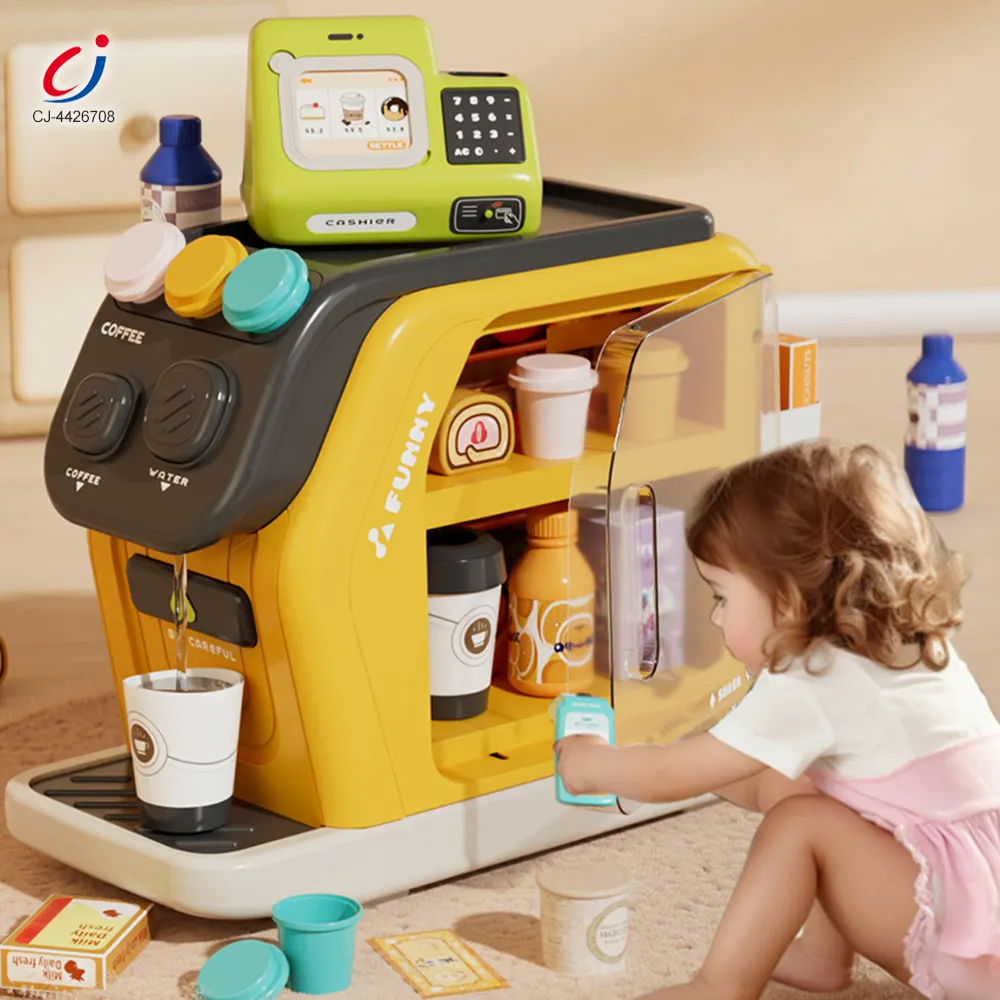
| Kitchen & Food Sets | Transactional & Polite Language | Ordering food, saying “please/thank you.” |
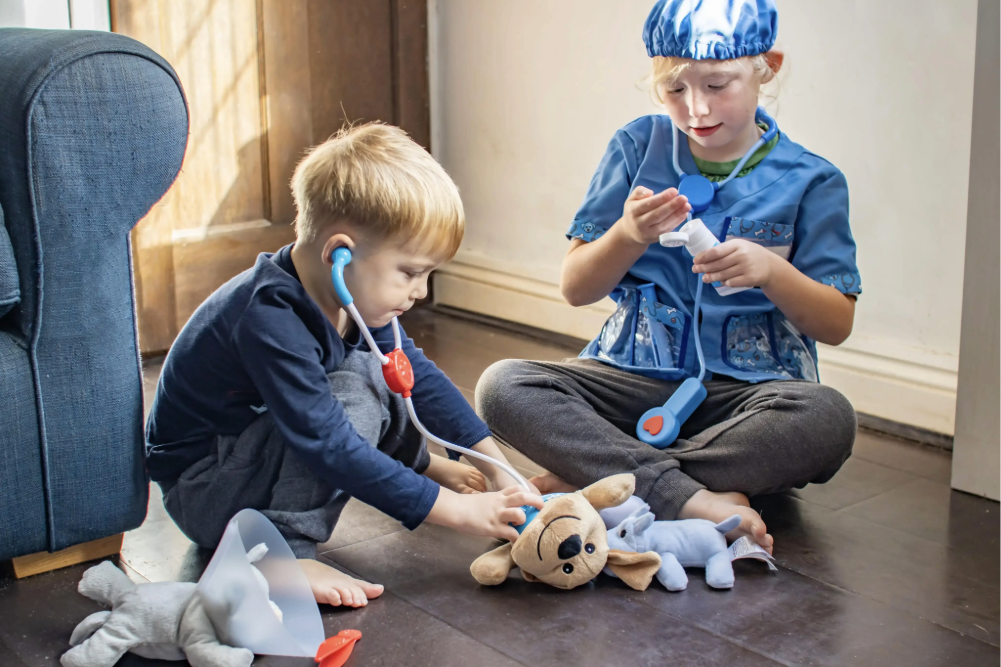
| Doctor & Vet Kits | Empathetic & Descriptive Language | Describing a “pain” or explaining a “cure.” |
| Dollhouses & Figures | Narrative & Relational Dialogue | Discussing family dynamics or friendships. |
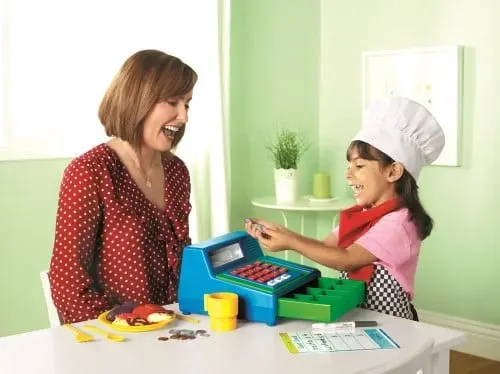
| Shop & Cash Registers | Mathematical & Inquiry Language | Asking “How much does this cost?” |
Each ままごと玩具 acts as a different “training module” for the brain’s language center. For instance, a doctor kit focuses on question-answer loops, while a dollhouse focuses on descriptive storytelling.
Tips for Maximizing Communication Through Play
As an educator or parent, simply providing a ままごと玩具 is only the first step. To maximize the ROI (Return on Investment) of play, consider these strategies:
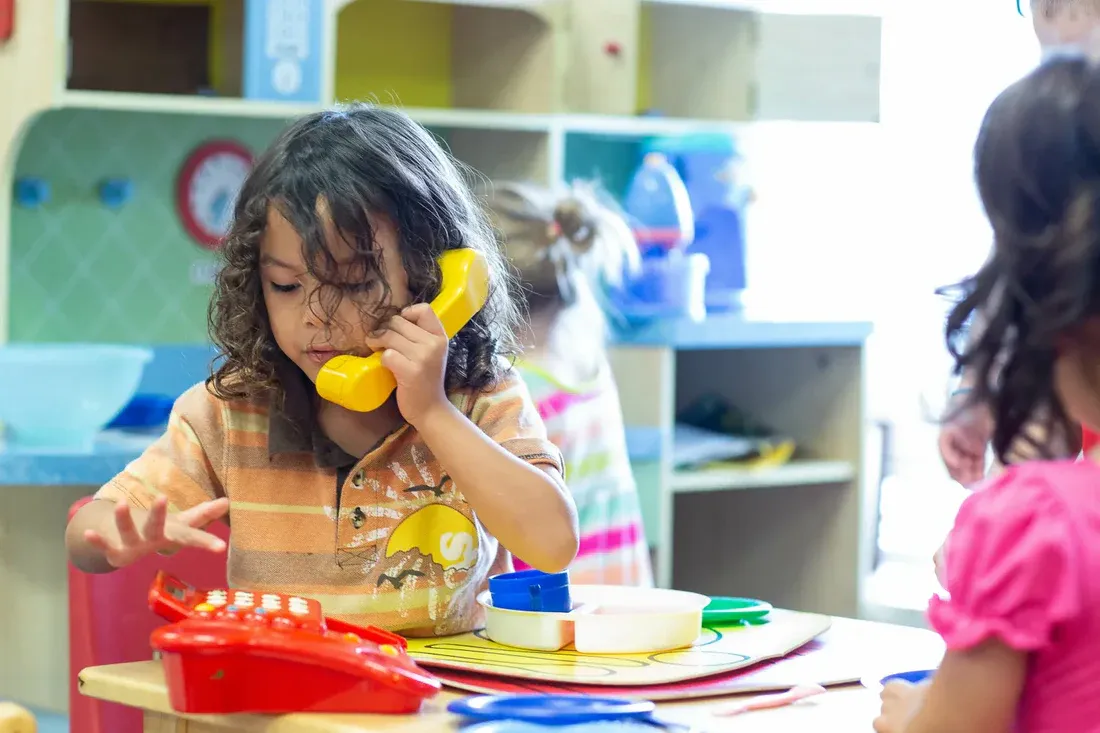
- Be a “Support Actor”: Join the play, but don’t take over. If the child gives you a ままごと玩具 phone, answer it and ask open-ended questions like, “Who is calling?” または “What is the weather like where you are?”
- Scaffold New Vocabulary: If the child is playing with a toy garage, introduce words they might not know, like “mechanic,” “engine,” or “transmission.”
- Rotate the Inventory: To prevent “toy fatigue,” don’t leave every ままごと玩具 out at once. Rotating sets every few weeks introduces new “themes” for conversation, keeping the child’s vocabulary growing.

Benefits for Parents and Educators
Beyond the immediate fun, these toys provide a “diagnostic window.” By observing how a child uses a ままごと玩具, educators can often identify speech delays or social anxieties early on. Furthermore, pretend play builds the confidence necessary for public speaking. A child who has spent hundreds of hours “performing” in a pretend world is much more likely to be an articulate and confident communicator in real-world social settings.
Insights: Boosting Sales in the Pretend Play Segment
Transition from “Individual SKU” to “Thematic Ecosystems”
In the industrial supply chain, volume is driven by systems, not isolated parts. Retailers often struggle with “dead” shelf space where single items don’t tell a story.
The Strategy: Instead of selling a standalone pretend play toy, offer curated “Thematic Bundles.” For example, combine a “Modern Chef Kitchen” with “Sustainable Wooden Produce” and “Eco-Friendly Chef Apparel.”
The Sales Hook: Pitch these bundles to your retailers as “Instant Window Displays.” By reducing the effort they spend on merchandising, you increase your Average Order Value (AOV).
The “SEL” (Social Emotional Learning) Sales Pitch
The 2026 educational market is obsessed with Social Emotional Learning (SEL). A pretend play toy is the perfect vehicle for this.
The Strategy: Update your B2B catalogs to categorize products by developmental milestones rather than just “toy types.” Label a doctor kit as a “Crisis Management & Empathy Builder” or a shop set as a “Financial Literacy Starter.”
Why It Works: This language allows your retail clients (especially those selling to schools or high-end boutiques) to justify premium price points to end-consumers.
Industrial Integrity: Sustainability as a Sales Closer
From a manufacturing standpoint, “sustainability” has moved from a buzzword to a regulatory requirement. As a distributor, your “Green” credentials are your strongest shield against low-cost, low-quality competitors.
The Strategy: Prioritize pretend play toy inventory that utilizes FSC-certified wood, recycled ABS plastics, or bio-based resins.
The Technical Edge: Be prepared to provide certificates of conformity and non-toxicity (like ASTM D4236 or EN71) upfront. In a world of increasing product recalls, “Safety-as-a-Service” is a powerful B2B sales tool.
Conclusion: Investing in the Future of Speech
In the industrial landscape of toy manufacturing, we often look for the “next big thing” in tech. However, the most sophisticated “technology” remains the human brain, and the best way to “program” it for communication is through the humble ままごと玩具.
Whether you are a parent looking to boost your child’s confidence or a wholesaler looking to provide high-value educational tools, understanding the linguistic power of these toys is essential. Invest in toys that encourage children to speak, imagine, and interact—because every time they say “Once upon a time,” they are building the skills that will last a lifetime.
成吉について

成吉思汗 is a professional toy factory and トップ・トイ・サプライヤー based in Chenghai, China’s renowned toy production hub, with over 25 years of experience serving global B2B customers. We deliver a stable supply of wholesale toys and wholesale pretend play sets with traceable quality and regulatory compliance. Our custom toy solution includes tailored designs, branding, and packaging support, helping retailers, licensors, and distributors bring safe, engaging toys to market with predictable supply and performance.