Many international sourcing relationships do not begin with a large purchase order.
Sometimes, they start with a simple conversation at a trade show, a business card exchange, or a first message after the exhibition.
For many toy buyers, a trade show is not only a place to find products. It is also an opportunity to evaluate suppliers:
- Do they understand my market?
- Can they recommend suitable products?
- Will they provide support after the first conversation?
- Can they become a reliable long-term partner?
A successful supplier relationship is rarely built in one meeting.
It is built through continuous communication, professional support, and successful cooperation step by step.
This article shares the journey of how an outdoor toy wholesaler from the Middle East developed cooperation with Chengji Toys — from a first trade show contact to stable quarterly repeat orders. Along the way, we also point out what buyers should look for at each stage, so the same checklist can be used when evaluating any supplier.
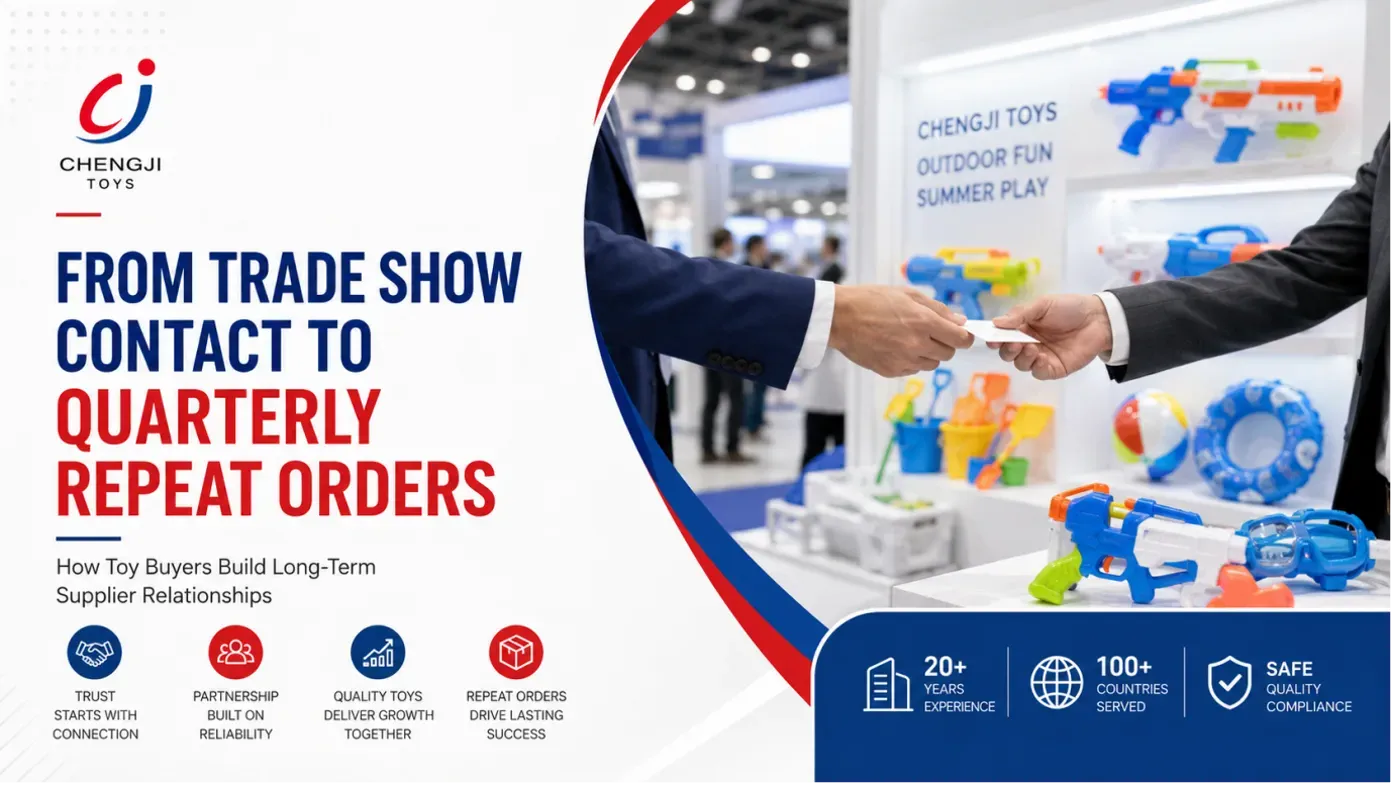
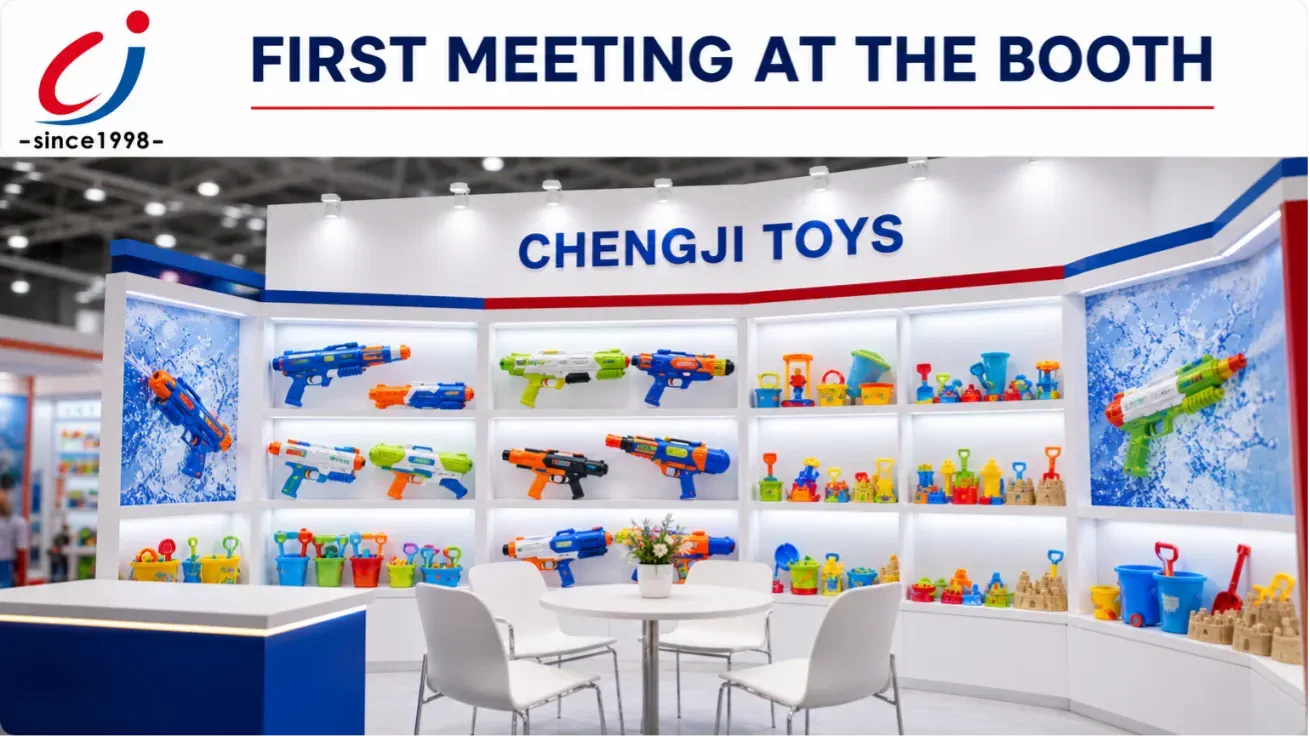
1. The First Meeting: A Simple Conversation, No Immediate Order
The customer was an experienced outdoor toy wholesaler serving the Middle East market, focusing on seasonal categories such as:
- Outdoor toys
- Water toys
- Beach toys
- Summer entertainment products
During a trade show, the customer visited our booth and discussed several product ideas.
We introduced our product categories, understood their market direction, and exchanged contact information.
However, there was no immediate order.
The customer did not request a quotation on the spot or make a purchasing decision during the exhibition.
This situation is actually very common.
For many buyers, the first meeting is not about placing an order immediately.
It is about evaluating whether a supplier can provide:
- Suitable products
- Reliable communication
- Market understanding
- Long-term support
A trade show contact is only the beginning of the sourcing journey.
What to look for at this stage: a supplier who listens to your market direction and explains products with context — not one who simply pushes a price list.
2. After the Show: Providing Value Before Asking for Orders
After the exhibition, Chengji Toys continued communication based on the customer’s needs.
Instead of simply asking:
“Do you want to place an order?”
We focused on helping the buyer understand the products and evaluate market opportunities.
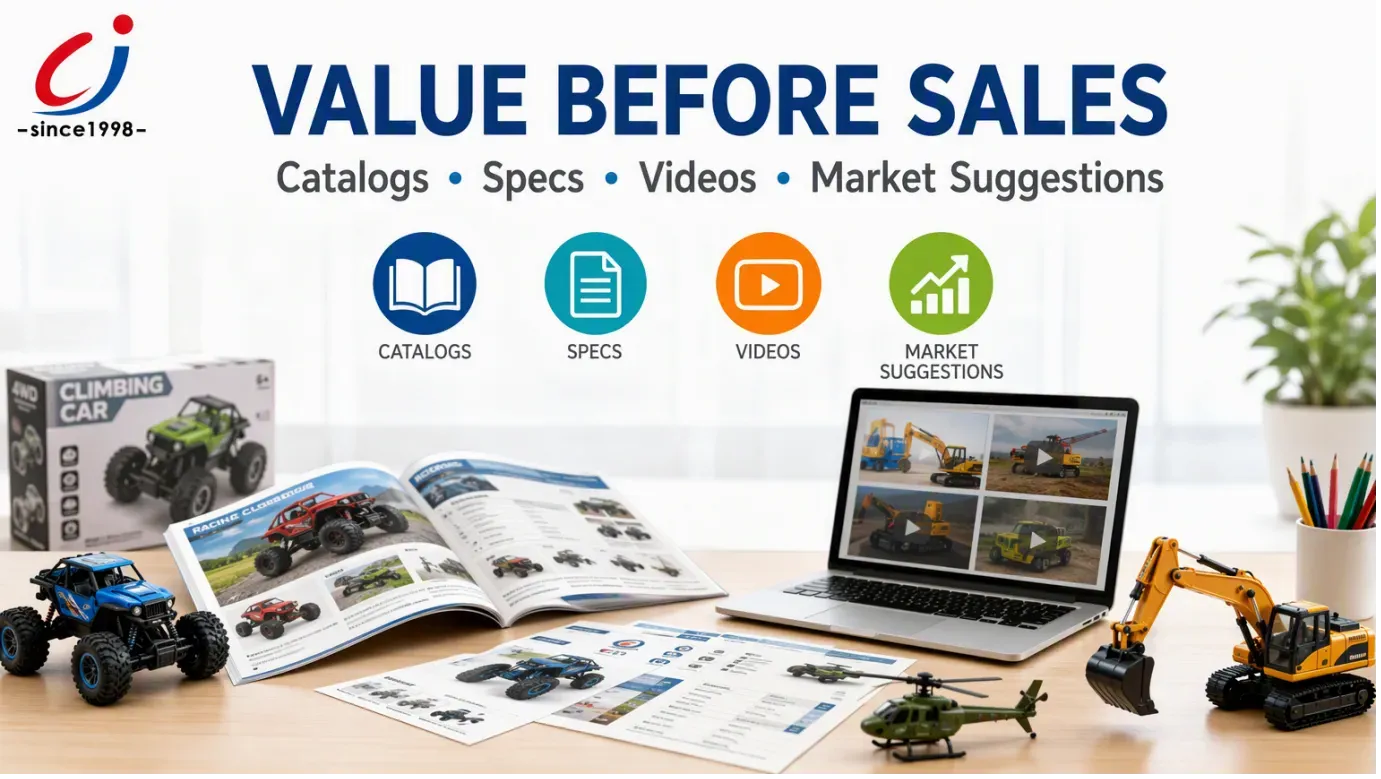
Step 1: Complete Product Information
We provided:
- Product catalogs
- Real product videos
- Product specifications
- Packaging details
- Selling points
This helped the customer review products more efficiently after returning from the exhibition.
Step 2: Recommend Products Based on Market Needs
Rather than sending a general product list, we selected suitable products according to:
- Customer’s target market
- Seasonal demand
- Product positioning
- Price level
For outdoor toy buyers, factors such as climate, consumer habits, and selling season can directly influence product performance.
Step 3: Support the Buyer’s Decision-Making
A professional supplier should not only provide products.
They should help buyers answer important questions:
- Is this product suitable for my market?
- Is the packaging attractive enough?
- Does the product have repeat-sales potential?
- What improvements can make it more competitive?
The difference between ordinary follow-up and professional sourcing support is simple:
Selling products focuses on closing an order.
Sourcing support focuses on helping buyers make better decisions.
What to look for at this stage: follow-up content that helps you decide — catalogs, specs, videos, market suggestions — rather than follow-up messages that only ask for an order.
3. From Trial Order to Quarterly Repeat Orders
After several rounds of communication, the customer placed a small trial order.
For a new supplier relationship, the first order is not only about quantity.
It is a test of reliability.
During the trial order process, Chengji Toys prioritized:
- Production schedule follow-up
- Quality inspection coordination
- Packaging confirmation
- Shipment preparation
- Communication updates
For buyers, a successful first order answers important questions:
Can the supplier deliver on time?
Can communication remain efficient?
Can problems be handled professionally?
A trial order serves as the supplier’s first real‑world test. For buyers, it is the quickest way to verify whether a supplier’s promises hold up in actual execution.
After receiving the products, the customer gave positive market feedback.
The following quarter, the customer returned with additional orders.
Over time, purchasing gradually developed into a stable quarterly ordering rhythm.
What to look for at this stage: visible process discipline — packing, warehouse preparation, quality inspection, and shipment follow-up — because that is what a repeat order is built on.

4. What This Cooperation Shows
The four questions at the beginning of this article now have answers.
- Do they understand my market? Yes — recommendations were matched to the customer’s market and selling season.
- Can they recommend suitable products? Yes — not a general list, but a shortlist with context.
- Will they provide support after the first conversation? Yes — value-first follow-up came before any order.
- Can they become a reliable long-term partner? Yes — a trial order handled properly became quarterly repeat orders.
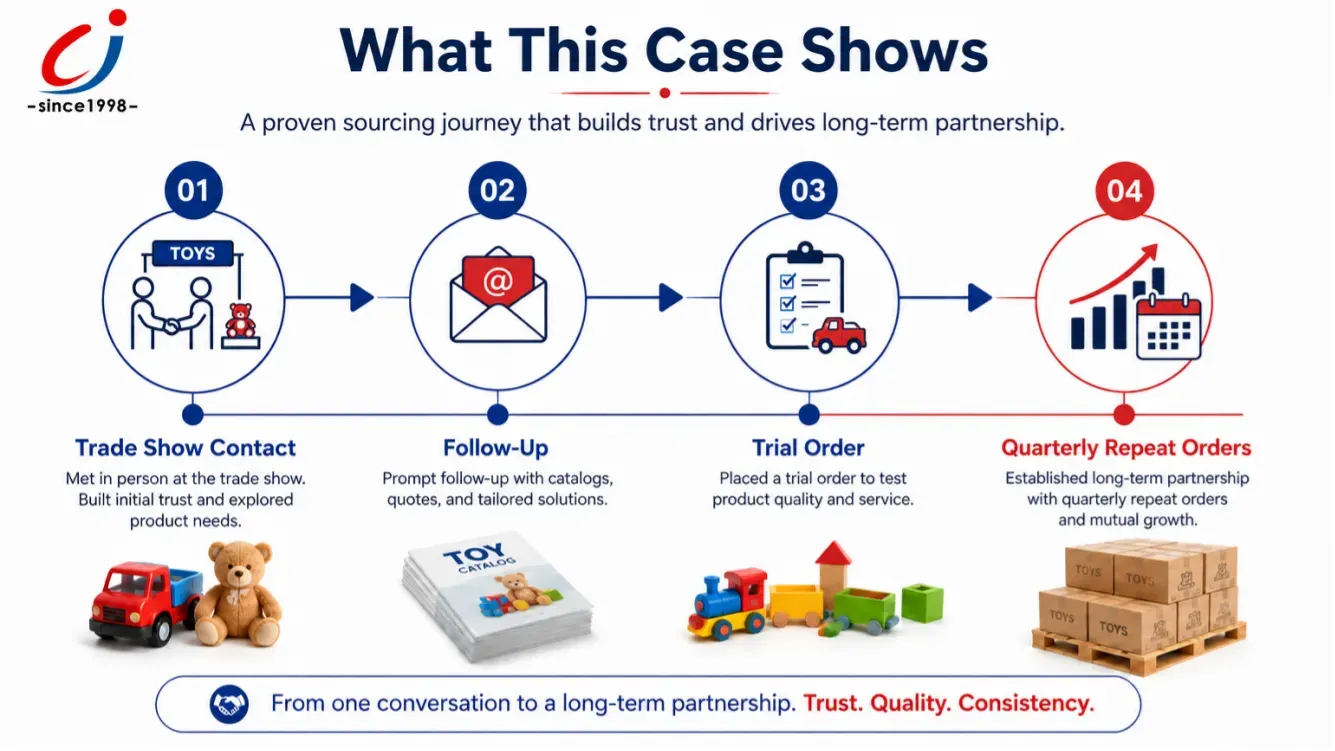
Long-term cooperation usually does not happen overnight.
It develops through several important stages:
1. Initial Contact
A trade show creates the first opportunity.
2. Professional Follow-Up
Useful information builds confidence after the meeting.
3. Trial Order Validation
Small orders allow buyers to test product quality and supplier reliability.
4. Long-Term Cooperation
Successful cooperation creates the foundation for repeat business.
For international toy buyers, the supplier selection process is not only about finding a low price.
It is about finding a partner who can support:
- Product selection
- Market matching
- Quality control
- Production coordination
- Long-term supply stability
Why Long-Term Supplier Relationships Matter
This case is not unusual — and that is exactly the point.
The toy market changes quickly.
New trends appear every season, and buyers need suppliers who can provide more than products.
A reliable sourcing partner can help buyers:
- Discover suitable products faster
- Reduce sourcing risks
- Improve purchasing efficiency
- Maintain stable supply
The strongest supplier relationships are built when both sides understand the market and grow together.
Final Thoughts
A trade show meeting may last only a few minutes.
But the relationship built after that meeting can create years of cooperation.
Whether the first connection comes from an exhibition, online inquiry, or product recommendation, Chengji Toys believes every opportunity deserves professional follow-up and careful support.
From product selection to trial orders and repeat purchasing, we help toy buyers build a more reliable sourcing process.
Looking for a toy supplier to support your next product plan?
Tell us your target market and product preferences — we will start with a tailored recommendation, not a sales pitch.
Contact Chengji Toys for:
- Product recommendations
- Small trial orders
- Market-based sourcing suggestions
- Long-term supply solutions
Email: [email protected]
Phone / WhatsApp / WeChat: +86-13715966567