Importing toys from China to Brazil can give local wholesalers, distributors, retailers, and e-commerce sellers access to a broad product range and competitive sourcing options. However, a successful import involves more than finding a supplier and arranging shipping. Brazilian importers must also consider NCM classification, INMETRO requirements, import taxes, documentation, and customs clearance.
This guide explains the key steps for importing toys from China to Brazil, from preparing your import operation to receiving the goods in Brazil.
Step 1 – Understand Brazil’s Toy Import Requirements Before Ordering
Before contacting Chinese suppliers, Brazilian buyers should understand the basic requirements for importing commercial goods into Brazil.
Check Your Importer Registration
Companies importing goods into Brazil generally need an active CNPJ and the appropriate authorization to operate in Siscomex, Brazil’s foreign trade system.
The importer may need to complete Siscomex habilitation through the Brazilian Federal Revenue Service. The applicable authorization category depends on the company’s circumstances and financial capacity.
If you are a new importer, consider working with an experienced Brazilian customs broker (despachante aduaneiro) to review your registration, documentation, and import arrangements before placing an order.
Choose an Import Model
Brazilian buyers may handle imports directly through their own qualified importing company or use an eligible third-party import arrangement.
The appropriate model depends on factors such as:
- Whether your company is already authorized to import.
- Your expected import volume and frequency.
- Your experience with Brazilian customs procedures.
- Your financial and operational resources.
Clarify who will act as the importer of record and who will handle customs responsibilities before confirming the transaction.
Define Your Import Requirements
Prepare a preliminary purchasing plan that identifies:
- Toy categories and product specifications.
- Estimated order quantities and target purchase prices.
- Intended sales channels and customer groups.
- Required product certifications and documentation.
- Preferred shipping method and delivery schedule.
These details help suppliers assess your requirements and allow your customs broker to identify potential regulatory issues early.
Step 2 – Identify the Correct NCM Code for Your Toys
The NCM (Nomenclatura Comum do Mercosul) is Brazil’s product classification system. Correct classification is essential because it determines the applicable import taxes and may affect administrative controls and product requirements.
Why NCM Classification Matters
Different toys can fall under different NCM codes depending on their materials, construction, functions, and intended use.
For example, a plastic construction toy, a stuffed animal, and an electronic remote-control toy may require different classification assessments. Even products that appear similar commercially may not necessarily share the same NCM code.
An incorrect classification can result in:
- Incorrect import tax calculations.
- Delays during customs clearance.
- Additional documentation or regulatory requirements.
- Potential penalties or reassessment by customs authorities.
Do not rely exclusively on a supplier’s HS code. The international HS classification provides a starting point, but Brazil uses the more detailed NCM system.
How to Check the Correct NCM Code
A practical approach is to:
- Collect detailed product specifications, including materials, functions, construction, and intended use.
- Ask your supplier for the proposed HS code and technical product description.
- Have your Brazilian customs broker verify the corresponding NCM classification.
- Use the official Siscomex tools to check the administrative treatment associated with the proposed NCM.
The NCM should be confirmed before finalizing the purchase order because it affects both the cost calculation and the compliance review.
Step 3 – Check INMETRO Certification and Other Product Requirements
Product compliance is one of the most important considerations when importing toys into Brazil. Buyers should verify the applicable requirements before paying for mass production or arranging shipment.
INMETRO Certification for Toys
INMETRO is Brazil’s National Institute of Metrology, Quality and Technology. Its regulations establish conformity assessment requirements for products within its regulatory scope.
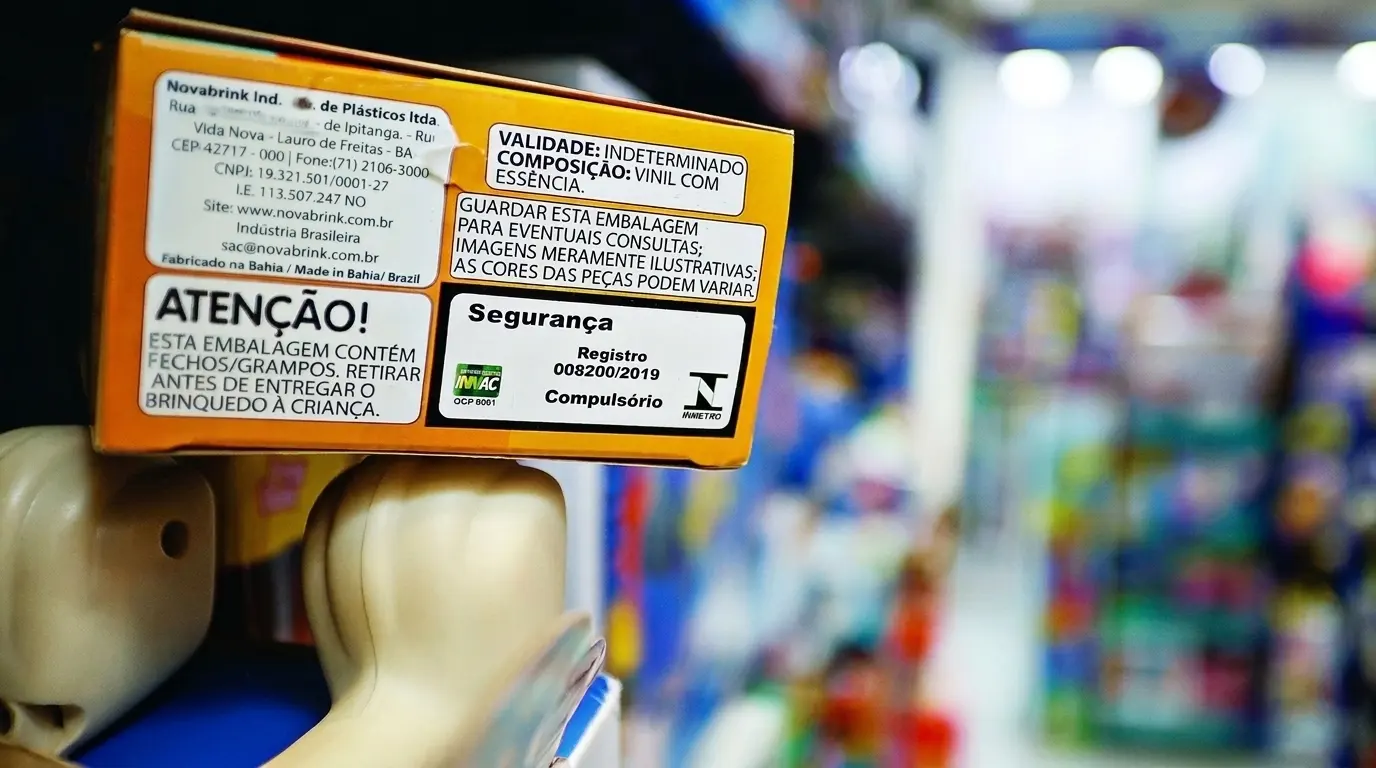
Toy products covered by Portaria INMETRO No. 302/2021 are subject to compulsory conformity assessment and registration requirements for commercialization in Brazil.
Depending on the product and applicable rules, the compliance process may involve:
- Product testing against applicable technical requirements.
- Certification through an authorized conformity assessment body.
- Product registration with INMETRO.
- Required product identification and labeling.
Not every product marketed as a toy should automatically be assumed to follow an identical certification procedure. The applicable scope and requirements must be checked against the product’s characteristics and current regulations.
For importers, this means that a supplier’s general statement that a product is safe or tested is not sufficient evidence of Brazilian compliance. Request relevant technical information and certification documents, then verify whether they apply to the exact product model being purchased.
Additional Requirements for Electronic and Remote-Control Toys
Electronic toys may require additional regulatory checks depending on their functions and components.
For example, products containing radio-frequency communication functions, such as certain Bluetooth or Wi-Fi devices, may fall under ANATEL’s telecommunications conformity and homologation requirements.
Some remote-control products may also require ANATEL homologation depending on their wireless technology and applicable regulatory classification.
Do not assume that every battery-powered or remote-control toy automatically requires the same approval. Review the product’s technical specifications and confirm the applicable requirements with the relevant Brazilian authority or compliance specialist.
Check Import Authorization Before Shipment
Product certification and import authorization are related but separate issues.
Brazilian importers should check the administrative treatment of the product through Portal Único de Comércio Exterior, including whether an LPCO (Licenças, Permissões, Certificados e Outros Documentos) is required.
INMETRO’s current import guidance indicates that it does not require pre-shipment licensing for regulated products as a general rule. However, this does not remove the obligation to comply with applicable product certification, registration, or other administrative requirements.
Before shipment:
- Confirm the NCM classification.
- Check the administrative treatment in Portal Único.
- Determine whether an LPCO or other authorization applies.
- Verify the product’s certification and registration status where required.
This review helps prevent situations where goods arrive in Brazil without the documentation or regulatory status needed for the intended import operation.
Step 4 – Find and Evaluate Chinese Toy Suppliers
Once the regulatory requirements are understood, the next step is to identify suppliers that can meet your product, quality, and purchasing requirements.
China has a large toy manufacturing and sourcing network. Buyers can find suppliers specializing in plastic toys, educational toys, plush toys, remote-control toys, outdoor toys, and many other categories.
However, choosing a supplier based only on the lowest quotation can create problems later.
Evaluate Product and Supplier Compatibility
Start by checking whether the supplier can provide the specific products and specifications you need.
Important evaluation points include:
- Product materials, dimensions, functions, and age recommendations.
- Available models, colors, and packaging options.
- Minimum order quantities and production capacity.
- Sample availability and sample lead time.
- Experience with export orders and international buyers.
- Ability to provide technical documents and product information.
Ask for samples before confirming a large order. Sample evaluation allows you to check product appearance, construction, packaging, and functionality before committing to mass production.
Review Quality Control and Export Support
A reliable sourcing arrangement should include clear quality expectations and an agreed inspection process.
For larger orders, buyers can establish inspection checkpoints covering sample approval, production progress, product appearance, functionality, packaging, and final shipment preparation.
If you are purchasing multiple toy categories, consider whether one supplier can realistically meet all your requirements. In some cases, sourcing through several specialized factories may provide better product coverage than relying on a single factory.
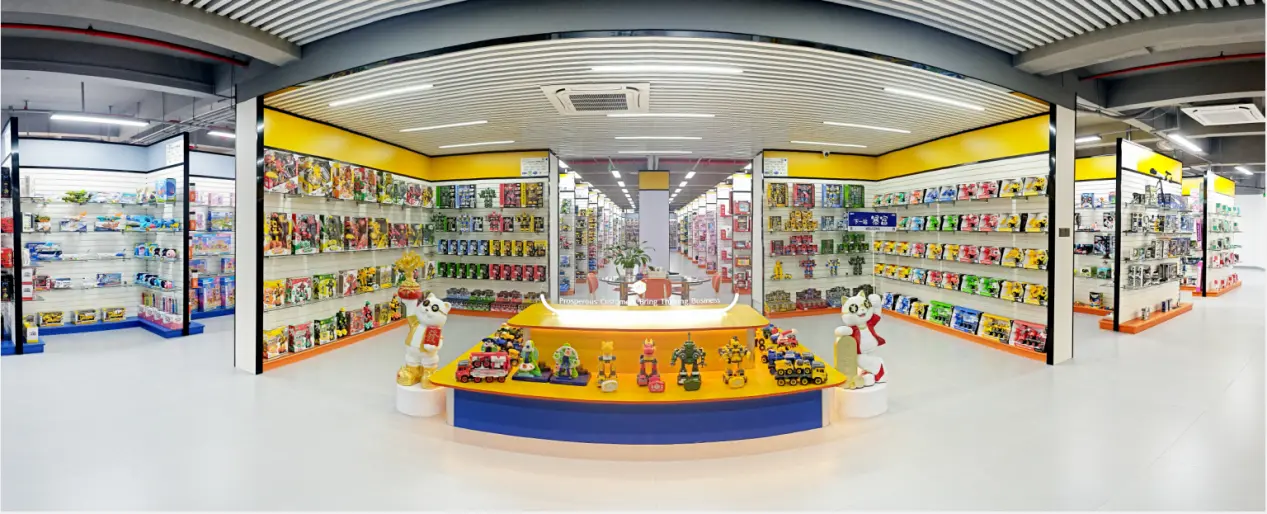
The Chenghai area in Shantou, Guangdong, is one of China’s important toy sourcing and manufacturing clusters. Its broad network of toy-related businesses gives international buyers access to a wide range of products and potential supplier options.
Step 5 – Calculate the Total Cost of Importing Toys into Brazil
The factory quotation is only one part of your total import cost. Brazilian buyers should calculate the estimated landed cost before confirming an order.
Main Cost Components
| Cost component | What to consider |
|---|---|
| Product cost | Unit price multiplied by order quantity |
| Personalización | Logo printing, packaging, product modifications, and tooling where applicable |
| International freight | Sea freight or air freight charges |
| Insurance | Cargo insurance based on the shipment arrangement |
| Import Duty (II) | Determined by the applicable NCM and customs valuation |
| IPI | Industrialized Products Tax, where applicable |
| PIS/COFINS-Importação | Federal contributions applicable to imports |
| ICMS | State-level tax, with treatment depending on the applicable rules |
| Customs and port expenses | Brokerage, handling, storage, and other applicable charges |
| Compliance costs | Testing, certification, registration, and related expenses |
The applicable tax treatment depends on the NCM code, customs value, import conditions, and other transaction-specific factors. Additional charges, such as AFRMM for applicable maritime shipments, should also be considered.
Use Official Tools to Estimate Import Taxes
Avoid using a single general tax percentage to estimate the cost of importing toys into Brazil. Different toy classifications and import conditions can produce significantly different tax outcomes.
Brazil’s official import tax simulator can help estimate applicable taxes and identify administrative requirements based on the product classification and import information.
For a more realistic budget, ask your customs broker to review:
- The proposed NCM code.
- Customs value, including applicable freight and insurance components.
- Applicable federal and state taxes.
- Port, brokerage, and domestic transportation costs.
- Product certification and testing expenses.
The final comparison should be based on landed cost per sellable unit, not simply the supplier’s factory price.
Step 6 – Confirm the Order and Prepare Import Documents
After supplier evaluation, compliance checks, and cost estimation, you can move toward order confirmation.
Confirm Product and Order Specifications
Before production starts, prepare a written specification sheet covering:
- Product name and model number.
- Materials, dimensions, and functions.
- Color and packaging requirements.
- Quantity and unit price.
- Logo and customization details.
- Applicable quality standards.
- Production schedule and delivery terms.
For customized products, approve the final sample and packaging design before mass production.
Prepare the Required Import Documents
The documents required depend on the product, transaction, and applicable import procedure. Common documents include:
Factura comercial
The commercial invoice records the seller, buyer, product descriptions, quantities, unit prices, total value, and other transaction details.
Lista de embalaje
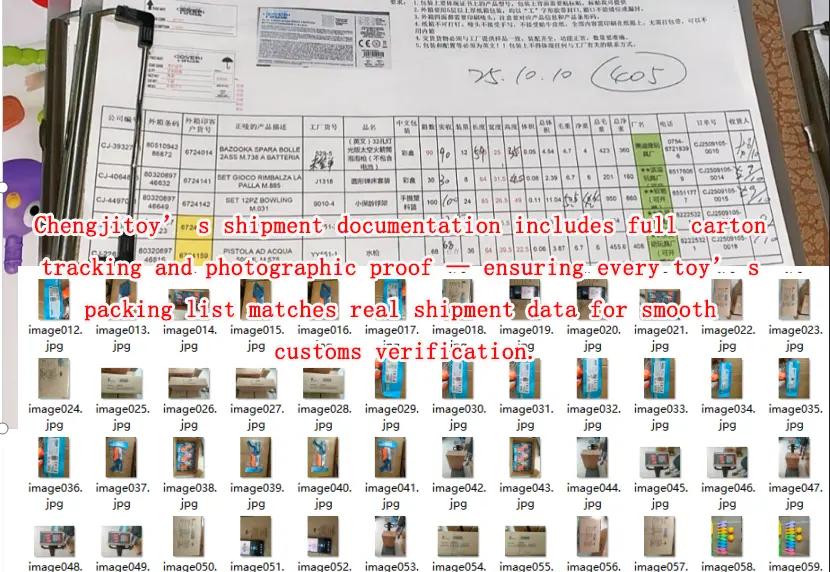
The packing list identifies the shipment’s packaging details, carton quantities, dimensions, gross weight, and net weight.
Conocimiento de embarque o carta de porte aéreo
The transport document provides information about the shipment and its transportation.
Product Compliance Documents
Depending on the product, these may include test reports, certificates, INMETRO registration information, or applicable ANATEL homologation records.
Import Authorization Documents
Where required, the importer must prepare the applicable LPCO and other documents associated with the administrative treatment of the goods.
Check that product descriptions, quantities, weights, and declared values are consistent across the documents. Inaccuracies can create avoidable questions during customs processing.
Step 7 – Arrange Shipping and Complete Brazilian Customs Clearance
Once production is complete and the necessary documentation is prepared, the goods can be shipped from China to Brazil.
Choose Between Sea Freight and Air Freight
The best shipping method depends on order volume, delivery requirements, and the buyer’s cost priorities.
| Factor | Sea freight | Air freight |
|---|---|---|
| Suitable for | Larger commercial orders | Samples and smaller shipments |
| Cost structure | Often more economical for larger volumes | Generally higher per unit of weight |
| Transit time | Usually longer | Usually shorter |
| Cargo capacity | Suitable for larger shipments | More limited by weight and volume |
| Main consideration | Port handling and longer planning cycles | Freight cost and shipment dimensions |
For regular wholesale orders, sea freight is often a practical option. Air freight may be more appropriate for samples, urgent replenishment, or smaller shipments where delivery speed is important.
Request quotations based on the actual cargo dimensions, gross weight, destination port, and shipping terms. Do not compare freight prices without checking what services and charges are included.
Understand Brazil’s Import Declaration Process
Brazilian customs clearance is handled through the country’s foreign trade systems, including Siscomex and Portal Único.
Depending on the applicable import procedure and the current migration schedule, an import operation may use the traditional DI (Declaração de Importação) or the DUIMP (Declaração Única de Importação) system.
The transition to DUIMP is being implemented in phases, so importers should confirm which declaration procedure applies to their specific operation rather than assuming that every shipment follows the same system.
The general clearance process may involve:
- Registering the applicable import declaration.
- Providing the required product and shipment information.
- Submitting applicable LPCO documents.
- Paying the relevant import taxes and charges.
- Completing customs review or inspection when selected.
- Obtaining customs clearance and arranging domestic delivery.
A Brazilian customs broker can help coordinate the declaration, document review, tax payments, and release process.
How Chengji Helps Brazilian Toy Buyers Source from China
For Brazilian importers, managing multiple Chinese toy suppliers can involve considerable communication, product evaluation, order coordination, and quality control work.
Chengji helps international buyers manage these sourcing activities through a toy supplier network based in Chenghai, Shantou, China.
Rather than requiring buyers to coordinate every factory independently, Chengji provides sourcing and supply-chain coordination services for different toy categories.
Multi-Category Toy Sourcing
Buyers looking for plastic toys, educational toys, plush toys, remote-control toys, and other categories can work with Chengji to identify suitable products and potential partner factories.
This is particularly useful for wholesalers and distributors building a broader product assortment. Buyers can explore wholesale toys from China across multiple categories instead of limiting their purchasing options to one factory’s product range.
Supplier Matching and Order Coordination
Chengji helps match buyer requirements with suitable suppliers based on product category, specifications, order quantities, and purchasing objectives.
For buyers managing several product categories, Chengji can also coordinate communication, production progress, and delivery arrangements across partner factories.
These one-stop toy sourcing services can help reduce the operational burden of managing multiple supplier relationships.
OEM/ODM and Product Customization
Brazilian brands, distributors, and private-label businesses may need products that match their own market positioning.
Chengji can coordinate customization requirements with relevant partner factories, including product development, sample confirmation, logo application, and packaging design.
Buyers planning private-label or customized product lines can discuss custom toy sourcing and OEM/ODM solutions based on their product concepts and order requirements.

Quality Control Coordination
Product quality is important for importers because defects, inconsistent specifications, and unsuitable packaging can affect customer satisfaction and sales.
Chengji can coordinate sample evaluation, production quality checks, and pre-shipment inspection arrangements according to the buyer’s requirements.
The inspection scope should be agreed upon before production or shipment so that suppliers understand the expected quality standards.
Compliance Documentation Support
Brazilian importers remain responsible for ensuring that imported products meet applicable local requirements. Certification, registration, and customs decisions must be handled by the relevant authorized parties.
Chengji can help buyers collect product specifications and available technical documents from partner factories and coordinate communication with their Brazilian customs brokers or compliance specialists.
This support can make it easier to identify missing product information before shipment, although it does not replace formal certification or regulatory approval.
If you are planning to import toys from China to Brazil, you can discuss your toy sourcing requirements with Chengji to explore product options, supplier matching, customization, and order coordination.
FAQs
1. Do All Toys Imported from China Require INMETRO Certification?
Not necessarily. INMETRO’s compulsory toy certification requirements apply to products within the scope of the relevant regulations, including Portaria 302/2021. Importers should verify the product category, intended use, and applicable regulatory scope before purchasing.
2. Can I Import Toys from China Without a Brazilian Importer?
Commercial imports generally require an eligible importing entity and compliance with Brazilian customs procedures. If your company is not authorized to import directly, you should discuss legally appropriate third-party import arrangements with a Brazilian customs broker.
3. How Do I Find the Correct NCM Code for Imported Toys?
Start with the product’s technical specifications and the supplier’s proposed HS code. Then have a Brazilian customs broker verify the corresponding NCM classification. The final code should reflect the product’s actual materials, functions, construction, and intended use.
4. Are Remote-Control Toys Subject to ANATEL Homologation?
Some remote-control toys may require ANATEL homologation because of their radio-frequency communication functions. The requirement depends on the product’s wireless technology and applicable regulations. Verify the specific model before importing.
5. How Much Does It Cost to Import Toys from China to Brazil?
There is no single import cost or universal tax rate for all toys. The total depends on the NCM code, product value, freight, insurance, applicable taxes, customs expenses, and compliance costs. Buyers should calculate the estimated landed cost before confirming an order.
Conclusión
Importing toys from China to Brazil requires careful planning across product sourcing, NCM classification, INMETRO compliance, tax estimation, documentation, and customs clearance.
The most important step is to verify product classification and regulatory requirements before committing to mass production. This helps buyers estimate the actual import cost and reduce the risk of customs or compliance delays.
For Brazilian wholesalers, distributors, and retailers, working with a sourcing partner can also simplify multi-category purchasing and supplier coordination. Chengji supports international buyers with product sourcing, supplier matching, OEM/ODM coordination, and quality control arrangements from China’s toy supply chain.