According to global toy distributors who have cooperation with Chengji Toys, low-price competition has become more intense than ever. Whether in Africa, the Middle East, or Europe and North America, many wholesalers are still circulating the same standard products: basic bubble machines, low-cost building blocks, and simple friction-powered cars.
When product offerings become too similar, buyers compare almost nothing except unit price. To win orders, distributors are forced to cut margins again and again. In some cases, the business becomes a volume game with very limited profit, or even a model that depends mainly on factory rebates.
Simply switching suppliers or pushing for lower factory prices does not solve the real problem. Standard products will always have someone quoting lower. As July 2026 becomes an important preparation period before year-end stocking, this is actually an ideal time for distributors to upgrade their product strategy. The good news is that meaningful differentiation does not always require heavy mold investment. With light customization, bundled product sets, and target-market-oriented upgrades, as a custom toy supplier, we can tell that distributors can create stronger market barriers and step away from pure price competition.
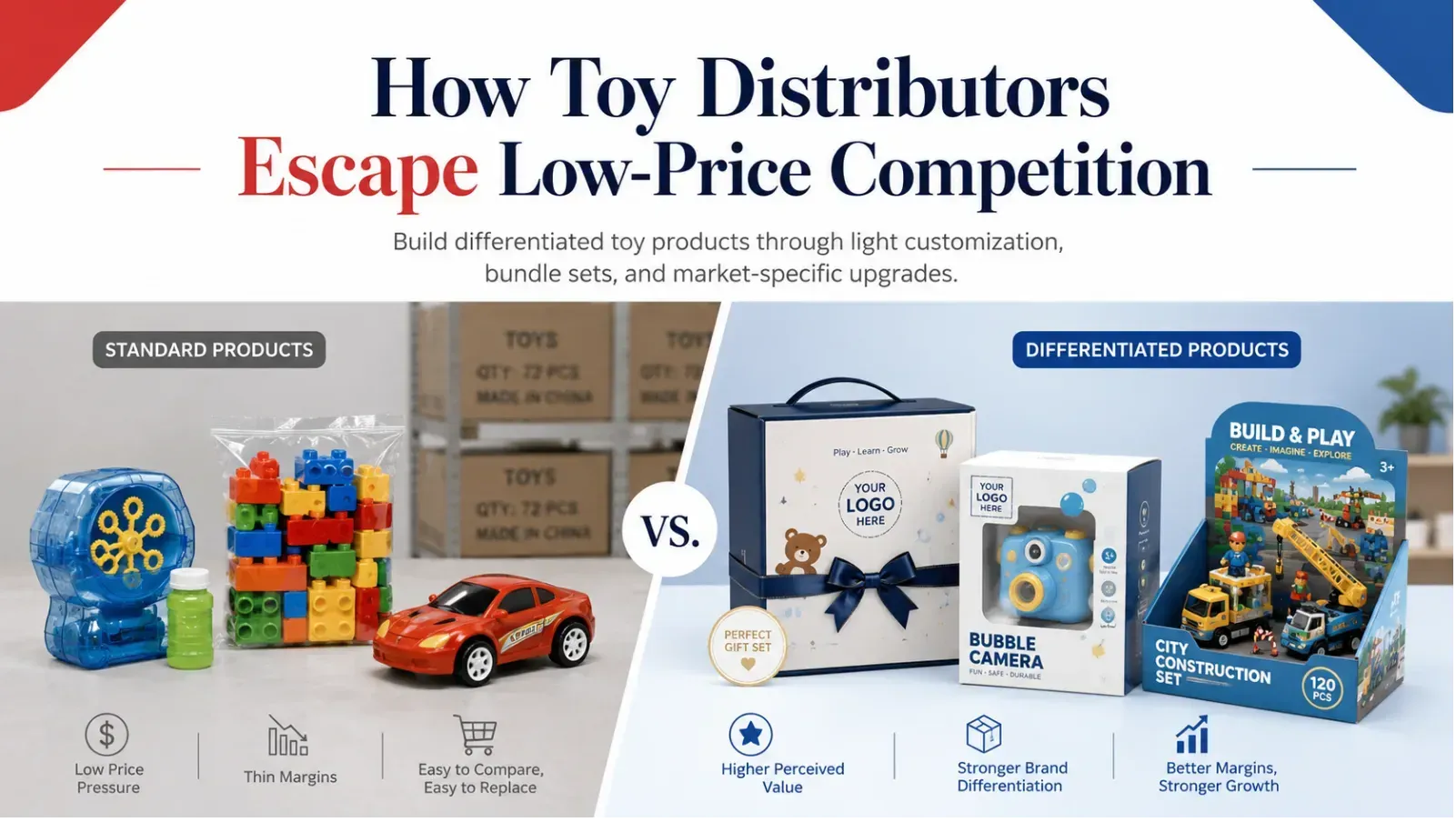
Why Low-Price Competition Hurts More Than Just Margins
Price pressure is only the surface problem. For toy distributors, selling standard products often creates several deeper business risks.
1. Standard Products Create No Customer Loyalty
Retailers and store buyers can switch suppliers at any time. If the product is the same everywhere, the only reason to stay is price. That makes long-term cooperation difficult to build.
2. After-Sales Problems Eat Into Profit
Low-cost commodity toys are often made with thinner materials and weaker structures. More breakage means more complaints, higher replacement costs, and more time spent handling after-sales issues. Even when sales volume looks healthy, the real profit may remain very limited.
3. Channel Access Becomes Restricted
Generic low-price products usually fit only low-end retail environments such as market stalls, discount shops, or basic wholesale channels. It becomes harder to enter better-value channels like baby stores, gift stores, educational retailers, or premium seasonal programs.
4. There Is No Premium Space During Peak Seasons
During Black Friday, Christmas, and other major retail periods, standard toys are easy to compare and easy to discount. Without packaging, branding, or channel-specific value, distributors lose the ability to create gift premiums or seasonal markups.
The core issue is not only lower pricing. It is the lack of uniqueness, lack of control, and lack of channel power.
Three Low-Cost Ways to Differentiate Without Opening New Molds
The good news is that distributors do not always need to build a completely new product from scratch. In many cases, differentiation can be achieved through practical and affordable changes to existing products.
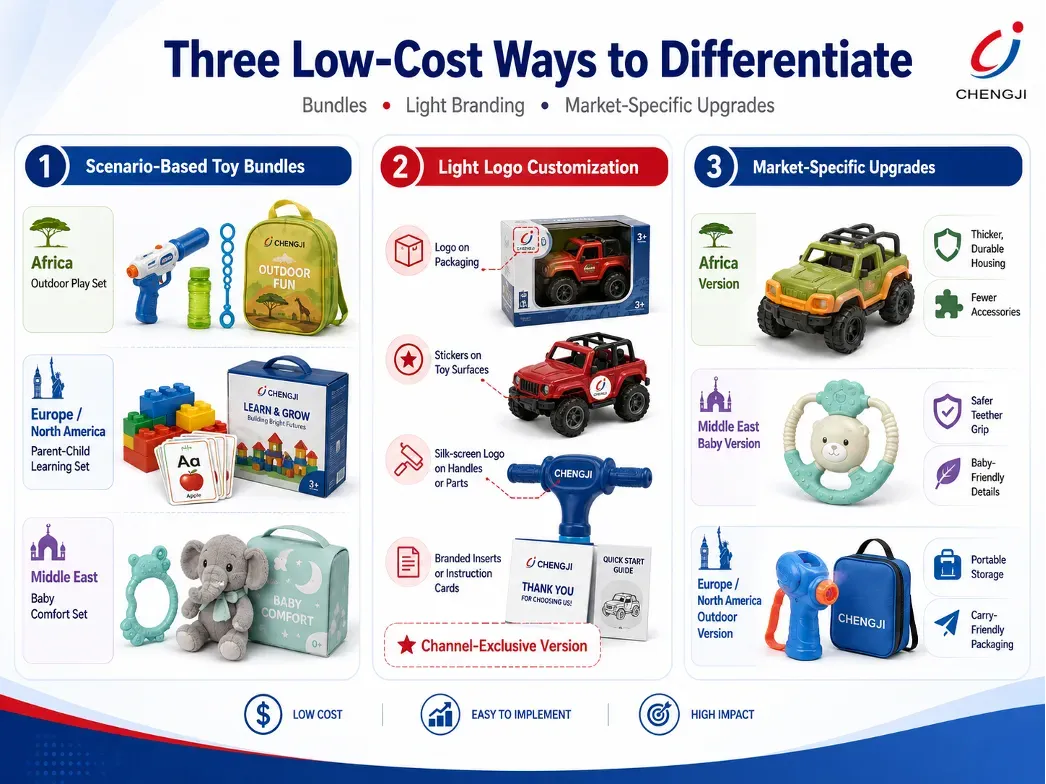
1. Build Scenario-Based Toy Bundles
Instead of selling single items one by one, distributors can combine related toys into themed sets that better match local family usage scenes.
For example:
- Africa outdoor play set: water gun + bubble wand + storage backpack
- Europe and North America parent-child learning set: large building blocks + cognitive cards + gift box
- Middle East baby comfort set: teether + soothing plush toy + portable packaging
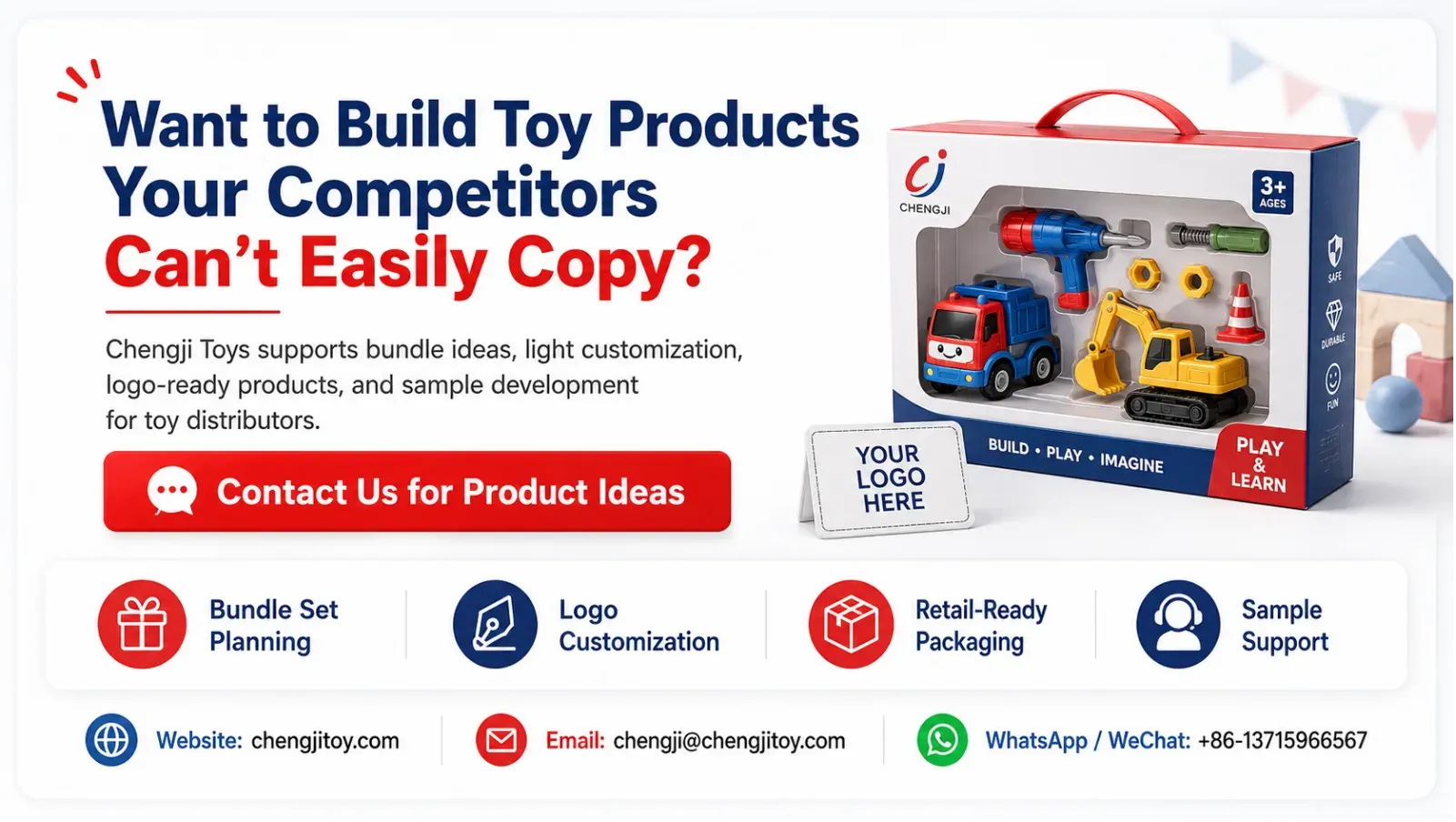
This strategy works because the market often compares single items, not coordinated sets. Once toys are turned into a bundled solution, price comparison becomes much harder. A well-designed bundle also feels more complete and more giftable, allowing distributors to sell at a noticeably higher price than the sum of the individual products.
With a custom color box or branded outer packaging, the same basic products can become a more premium retail offer. In many cases, this can significantly improve gross margin while reducing direct same-product competition.
2. Use Light Logo Customization to Create Channel-Exclusive Versions
Full mold development is not always necessary. In many cases, a distributor can build a more exclusive product simply by adding small branding elements.
This may include:
- logo printing on the packaging
- stickers on the product surface
- silk-screen printing on handles or parts
- branded inserts or instruction cards
Even when the toy itself remains structurally the same, adding private branding helps turn a common product into a market-specific or channel-specific version. That means local retailers can no longer compare the exact same version online so easily.
For distributors, this creates two important advantages:
- stronger control over local pricing
- better protection for channel-exclusive customers
This is especially useful for buyers who supply local chains, regional wholesalers, or store networks that want products carrying their own brand identity without the cost of full product development.
3. Upgrade Standard Products for Specific Consumer Groups
Another effective approach is to improve small details based on local market needs. Instead of changing the whole product, distributors can adjust structure, packaging, or user convenience to create a more market-relevant version.
Algunos ejemplos son:
- Africa version: thicker, more durable housing and fewer small accessories to reduce after-sales problems
- Middle East baby toy version: improved teether grip and safer, more baby-friendly details
- Europe / North America outdoor version: portable storage or carry-friendly packaging for travel and camping scenes
These kinds of upgrades often require only limited adjustments to material thickness, accessory setup, or packaging structure. The cost increase may remain small, but the retail value can improve clearly because the product feels more practical and more aligned with the end consumer’s lifestyle.
This is one of the most realistic ways for distributors to move away from “cheap standard goods” and toward products that are easier to position and harder to directly compare.
Why July Is a Good Time to Start This Strategy
July 2026 is a practical window for distributors who want to improve their product mix before the year-end selling season.

Factory planning is still manageable
At this stage, many factories can still coordinate bundling, printing, and light customization together with normal production schedules. That helps reduce the chance of paying extra rush costs later.
There is still time to prepare for Q4 retail
Starting in July gives buyers time to confirm packaging, prepare samples, and place production before Black Friday and Christmas demand peaks. This is especially important for distributors who want to launch bundled sets or gift-ready products during the holiday season.
It supports trade show and offline customer development
Distributors preparing for autumn trade shows and sourcing events can benefit from having differentiated sets in hand earlier. Exclusive bundles or branded toy sets are more attractive when showing products to potential retail chains, distributors, or event buyers at trade fairs and business meetings.
Rather than bringing another common product to the market, distributors can present something that looks more organized, more professional, and more commercially controlled.
What Differentiation Really Means for Toy Distributors
For most distributors, the goal is not simply to make products look different. The goal is to improve business quality.
A differentiated product strategy can help distributors:
- reduce direct price comparison
- improve customer loyalty
- enter stronger retail channels
- support higher seasonal pricing
- reduce low-end after-sales pressure
- create more stable long-term margins
That is why the real solution to price competition is not finding a cheaper supplier. It is building products that other competitors do not have in the same form.
Reflexiones finales
Low-price competition will always exist in the toy business. Standard goods will always have another supplier quoting lower. But distributors who build even a small layer of uniqueness can move into a much stronger position.
You do not always need a completely new mold to do this. Scenario-based toy sets, light logo customization, and consumer-targeted upgrades can already create meaningful market separation with relatively controlled cost.
For distributors preparing for year-end business, July is the right time to start.
If you would like to explore toy bundle ideas, light customization options, logo-ready products, or sample support, Chengji Toys is ready to help you build differentiated products that fit your market and channel strategy.
Need Support for Differentiated Toy Sourcing?
If you are looking for:
- custom toy bundle ideas
- logo-ready product options
- market-specific upgraded versions
- packaging customization support
- sampling and production guidance
feel free to contact us for further discussion.
Página web: chengjitoy.com
Correo electrónico: [email protected]
Teléfono / WhatsApp / WeChat: +86-13715966567