Battery selection can directly affect the performance, cost, safety, and shipping of an RC toy. For business buyers, choosing a battery is therefore not simply a technical decision.
NiMH, Li-ion, and LiPo batteries each offer different advantages. The right choice depends on the toy’s motor, target price, required runtime, product positioning, and transportation method.
For wholesalers, distributors, retailers, and brands, understanding these differences can help control both product cost and supply-chain risk. Follow Chengji, a top toy supplier, to learn more about that.
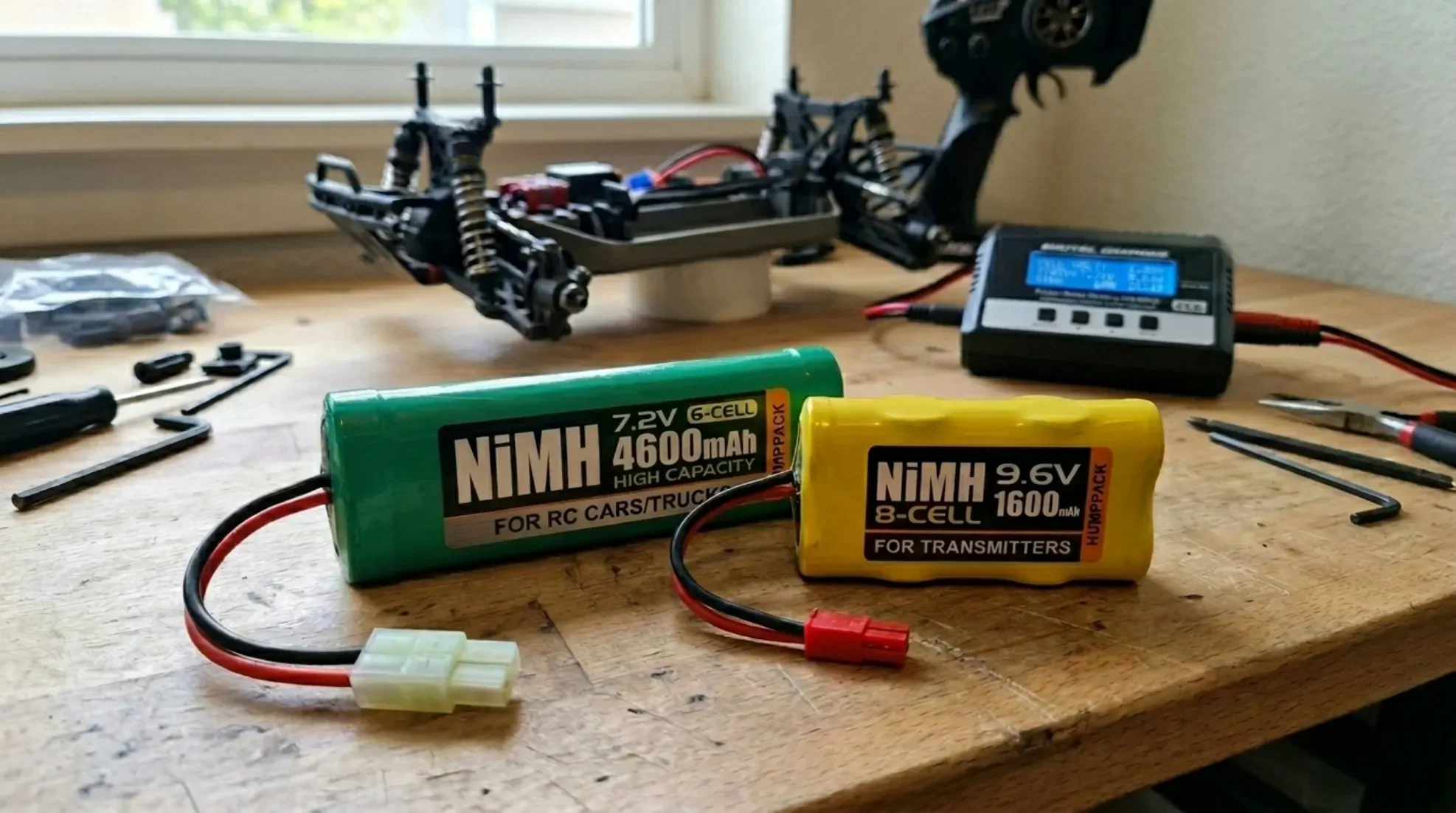
NiMH Batteries for RC Toys
Nickel-metal hydride (NiMH) batteries have long been used in rechargeable toys and RC products.
Advantages of NiMH
NiMH batteries can be attractive for entry-level products because they generally offer:
- Lower initial battery cost
- Relatively robust construction
- Familiar rechargeable technology
- Suitable performance for basic RC toys
For toys where affordability is the primary selling point, NiMH can still be a practical choice.
Limitations of NiMH
The main disadvantage is energy density. NiMH batteries are generally heavier and larger than lithium-based alternatives with comparable energy capacity.
This can affect the design of lightweight RC vehicles and reduce the available space for other components.
For business buyers, NiMH therefore makes more sense when low product cost and straightforward positioning are more important than maximum power-to-weight performance.
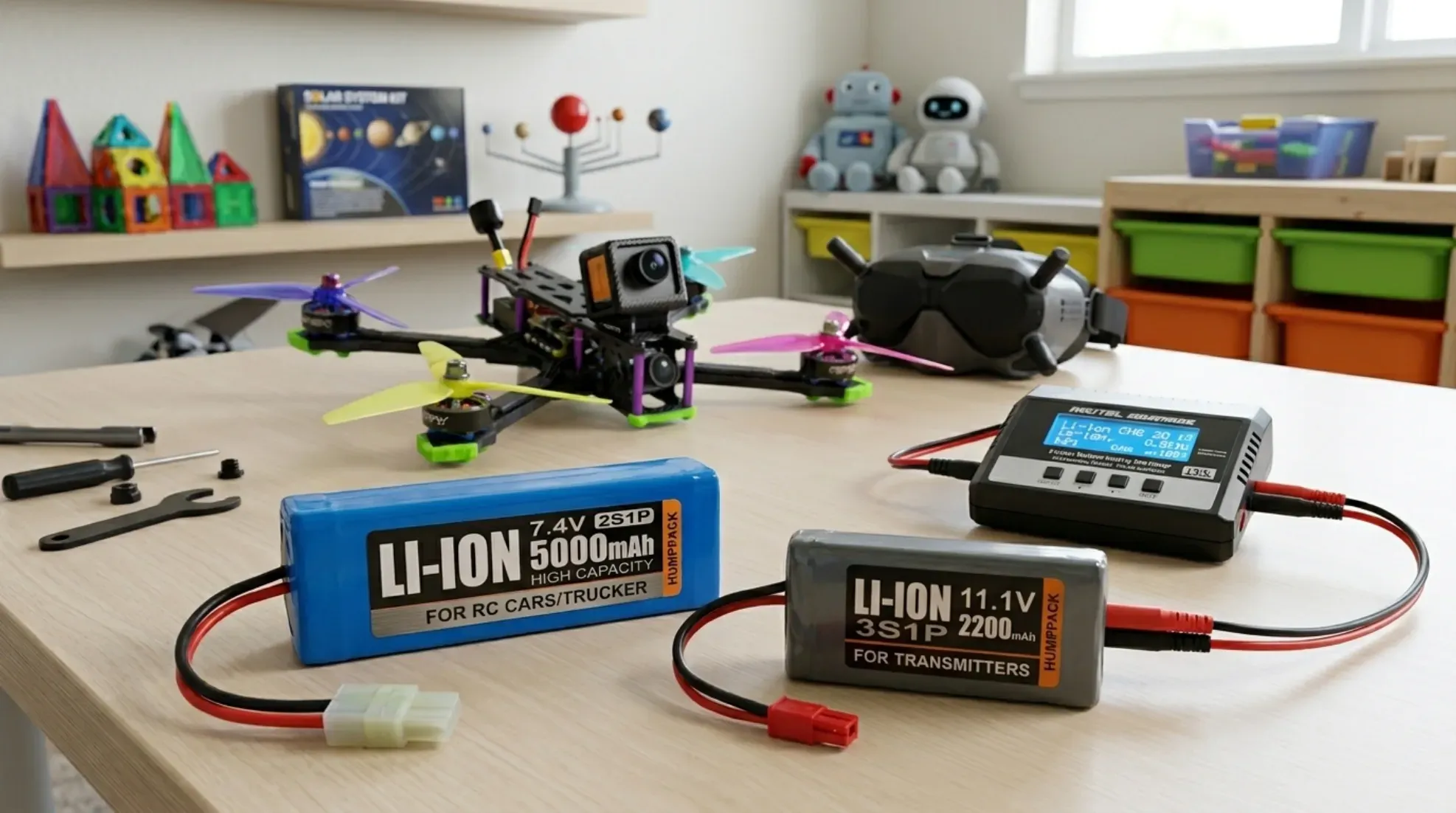
Li-ion Batteries for RC Toys
Lithium-ion batteries provide higher energy density than NiMH, allowing manufacturers to achieve longer runtime or lower weight within a similar physical space.
Advantages of Li-ion
For RC toys, Li-ion can provide:
- Lower weight
- Higher energy density
- Good runtime potential
- Compact battery configurations
This makes Li-ion useful for compact rechargeable RC toys where both performance and product size matter.
Limitations of Li-ion
Lithium-ion batteries require more attention to battery protection, charging, and transportation.
The battery also needs to be appropriately matched with the toy’s electrical system. Buyers should therefore evaluate the complete configuration rather than selecting a battery based only on capacity.
For many products, Li-ion can provide a useful balance between cost, weight, and performance.
LiPo Batteries for RC Toys
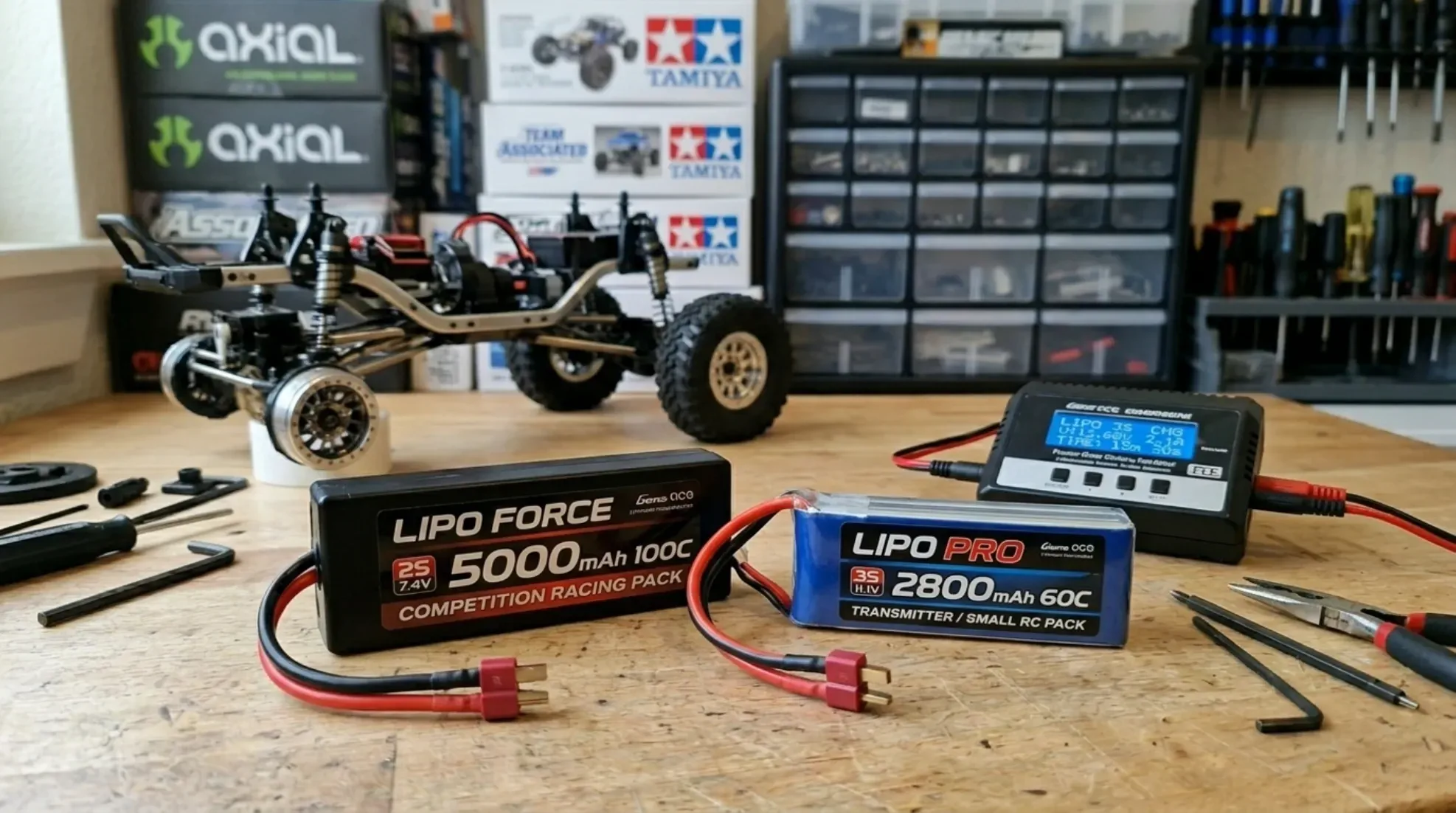
Lithium polymer (LiPo) batteries are particularly common in performance-oriented RC applications.
Why LiPo Is Popular in Performance RC Toys
The major advantage of LiPo is its high power-to-weight ratio.
Compared with heavier battery technologies, LiPo can provide strong power output while keeping the overall product relatively light.
This can be valuable for RC toys that require:
- Rapid acceleration
- Higher motor performance
- Lightweight construction
- Strong power output
For premium or performance-focused RC products, these characteristics can make LiPo an attractive option.
What Business Buyers Need to Consider
The higher performance of LiPo comes with greater requirements for handling and charging.
Buyers should pay attention to:
- Appropriate chargers
- Battery protection
- Storage and handling
- Product safety
- Transportation requirements
A LiPo battery may improve the product’s performance, but that does not automatically make it the most cost-effective option for every toy.
Summary Table
| Factor | NiMH | Li-ion | LiPo |
|---|---|---|---|
| Energy Density | Medium | High | High |
| Weight | Relatively heavy | Lightweight | Very lightweight |
| Power Output | Moderate | High | Very high |
| Cost | Generally lower | Medium | Medium–high |
| Handling | Relatively straightforward | Requires proper protection | Requires careful handling |
| Typical Use | Entry-level RC toys | Compact and mid-range RC toys | Performance-oriented RC toys |
The differences become more important as the product moves from basic RC toys toward higher-performance models.
RC Toy Battery Safety: What Buyers Should Consider
Battery safety should be evaluated as part of the complete toy system.
Battery Protection and Charging
The battery, charger, motor, and electrical system need to be properly matched.
Buyers should confirm:
- Voltage requirements
- Battery capacity
- Charging specifications
- Appropriate protection
- Compatibility with the toy’s electrical components
A battery with higher capacity is not automatically better if it is unsuitable for the product.
Battery Quality and Consistency
For wholesale buyers, consistency between production batches is equally important.
Poor-quality or inconsistent batteries can result in:
- Shorter runtime
- Reduced product performance
- Customer complaints
- Higher return rates
- Potential safety concerns
An experienced RC toy supplier should therefore be able to clearly explain the battery specifications used in the product and maintain consistent configurations during mass production.
Packaging and Handling
Battery-containing toys also require appropriate packaging and handling during transportation.
This becomes especially important for products containing lithium batteries, where transportation regulations can affect the available shipping options.
What Does UN38.3 Mean for RC Toy Battery Shipping?
UN38.3 is an important consideration when transporting lithium cells and batteries.
It refers to the UN testing requirements used to assess whether lithium batteries are suitable for transportation under applicable dangerous-goods rules.
For RC toy buyers, this means battery documentation should be considered before shipment rather than after the products are manufactured.
When sourcing lithium-battery-powered toys, buyers should ask their supplier about relevant battery testing and transportation documentation.
It is also important to understand that UN38.3 is a transportation-related battery testing requirement, not a general toy safety certification.
The exact documentation and shipping requirements can vary according to the battery configuration, shipment method, and applicable transportation rules.
Which RC Toy Battery Is the Most Effective for Business Toy Buyers?
The best option depends on the product and business model.
| Business Priority | Suitable Direction |
|---|---|
| Lowest product cost | NiMH |
| Lightweight design | Li-ion / LiPo |
| Longer runtime | Li-ion / LiPo |
| High-performance RC toys | LiPo |
| Entry-level RC toys | NiMH |
| Balanced cost and performance | Li-ion |
| Large-volume shipments | Evaluate total landed cost |
For a low-cost RC car designed for mass-market retail, NiMH may provide sufficient performance without unnecessarily increasing product cost.
For a compact mid-range product, Li-ion can offer a better balance.
For a performance-focused RC toy, LiPo may be justified because power and weight are part of the product’s value proposition.
The important point is to select the battery together with the toy’s overall design and target market.
Questions to Ask When Evaluating an RC Toy Supplier Before Ordering
Before placing a bulk order, buyers should ask:
Can the supplier explain the battery specifications?
The supplier should be able to clearly identify the battery type, capacity, voltage, and intended application.
Can they provide relevant battery documentation?
For lithium-powered products, buyers should discuss applicable transportation documentation before shipment.
Can they match the battery with the toy?
The battery should be selected according to the motor, product size, runtime, and intended performance.
Do they understand battery shipping?
The supplier should be familiar with the documentation and packaging requirements relevant to the planned transportation method.
Can they maintain consistent production?
For wholesale orders, consistent battery configurations are important for product quality and customer experience.
These questions help buyers evaluate whether a supplier can provide more than just a low factory price.
Conclusion
Choosing an RC toy battery should be part of the product planning process, not an afterthought. A battery that looks cheaper or more powerful may create higher costs elsewhere if it does not fit the toy design or shipping plan.
For business buyers, the better approach is to evaluate the battery, product positioning, safety requirements, and logistics together. An experienced RC toy supplier can help make this decision before production, reducing the risk of costly changes later.
FAQs About RC Toy Batteries
Which battery is best for RC toys?
There is no single best option. NiMH is suitable for cost-sensitive products, Li-ion provides a balance of weight and performance, and LiPo is more suitable for performance-oriented RC toys.
Are LiPo batteries safe for RC toys?
LiPo batteries can be used safely when appropriately designed, charged, handled, packaged, and transported. Buyers should work with suppliers that understand the relevant battery safety and transportation requirements.
Is NiMH cheaper than lithium batteries?
NiMH can have a lower initial battery cost, but total cost should also include the charger, packaging, testing, and transportation requirements.
Do LiPo batteries require UN38.3?
Lithium batteries intended for transportation are subject to applicable dangerous-goods transportation requirements, including UN38.3 testing requirements. Buyers should confirm the specific documentation applicable to their battery configuration and shipping method.
Can RC toys with lithium batteries be shipped by air?
Yes, but lithium-battery shipments are subject to applicable air-transport regulations and carrier requirements. The specific battery configuration and packaging affect the shipping conditions.
Which RC toy battery is best for wholesale buyers?
For entry-level products, NiMH can be cost-effective. Li-ion is often a balanced choice for mainstream products, while LiPo is more appropriate when high performance is a major selling point.