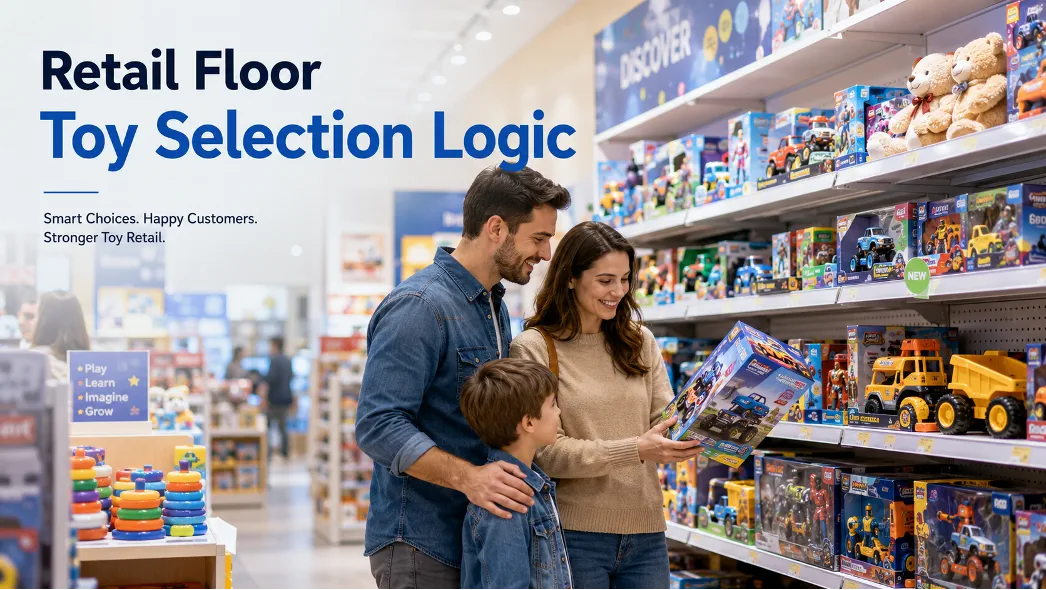
Many toy buyers choose products by following online bestseller lists. At first glance, this seems logical. If a toy sells well on e-commerce platforms, social media shops, or independent websites, it should also perform well in retail stores.
But in real offline retail environments, the selling logic is very different.
A product that performs well online may not move quickly on a physical store shelf. This is not always because the product is bad. In many cases, it is because the product was selected with an online mindset, but placed into an offline retail environment.
For toy distributors, wholesalers, and suppliers serving physical stores, understanding the difference between online selling and offline shelf selling is essential.
Offline stores have their own rules: shelf visibility, packaging clarity, try-me appeal, staff recommendation, price sensitivity, and impulse purchase triggers. These factors can decide whether a toy gets picked up, tested, and purchased — or simply ignored.
Why Online Bestsellers Often Struggle in Offline Stores
Online product selection is usually driven by traffic, content, reviews, and platform algorithms. However, offline retail works in a very different way. A toy that performs well online may not always convert well on a physical shelf.
| Comparison Point | Online Selling Logic | Offline Store Selling Logic |
| Customer Journey | Discover → Read → Review → Buy | See → Pick Up → Try → Buy |
| Decision Time | More time to compare and read details | Only a few seconds at the shelf |
| Conversion Driver | Traffic, videos, reviews, platform push | Packaging, display, visibility, try-me appeal |
| Product Explanation | Can rely on detailed online content | Must explain itself quickly |
| Key Challenge | Build trust through content | Win attention within 3–5 seconds |
| Must Answer | Why is it popular online? | What is it? How does it work? Why buy now? |
For offline retail, a toy needs strong shelf communication. If the packaging, display, or product design cannot quickly explain the product’s value, the toy may lose the customer’s attention before the purchase decision begins.
Three Hidden Factors in Offline Toy Selection
When selecting toys for physical stores, buyers should look beyond online sales data and unit price. The following three factors are especially important for offline retail performance.
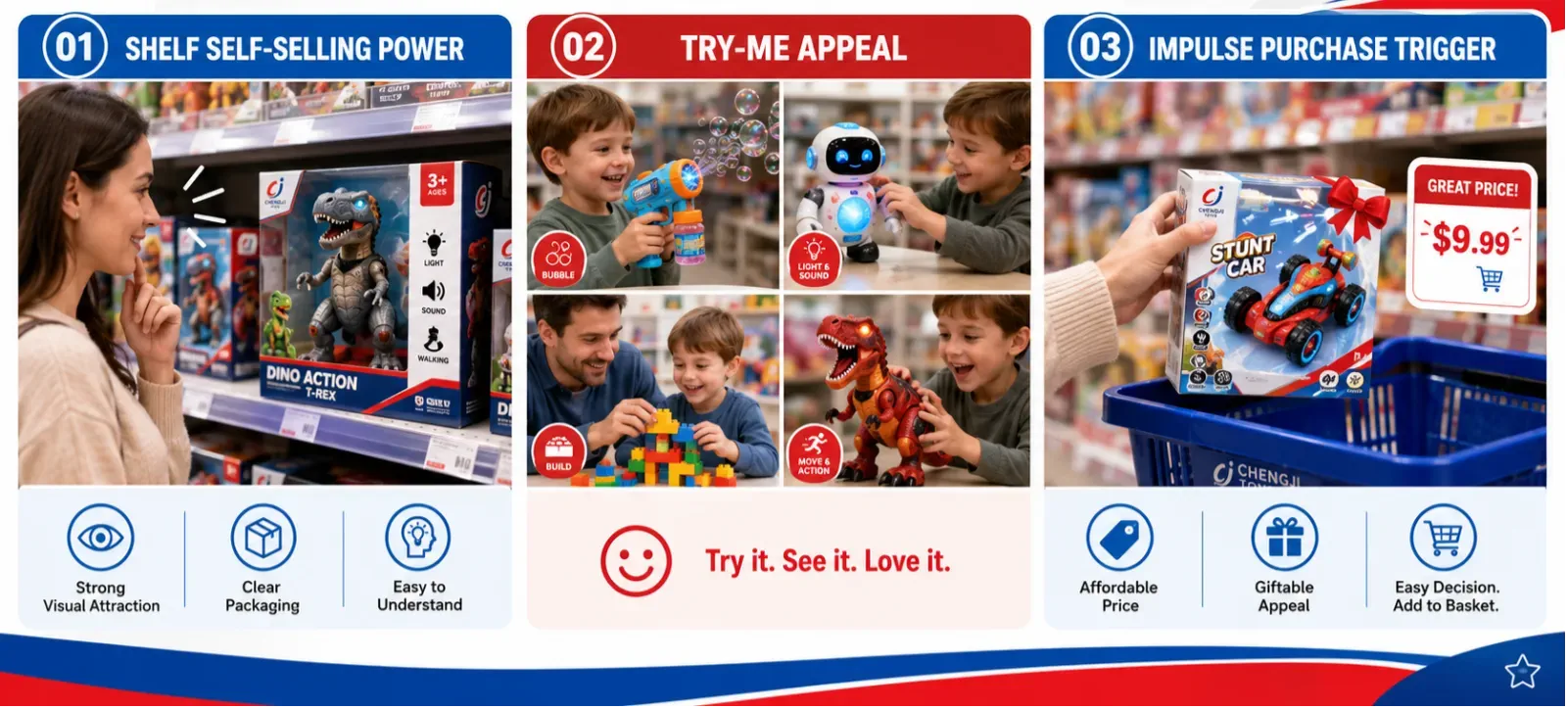
1. Shelf Self-Selling Power
In a physical store, a toy needs to communicate its value within 3 to 5 seconds. Customers usually do not stop to study every item carefully, so the packaging and product display must quickly show what the product is, how it works, and who it is for.
A good offline retail toy should have:
- clear front-facing packaging
- easy-to-understand product function
- visible age suitability
- strong visual attraction
- clear product display
Packaging plays a major role here. For many toy categories, the customer’s first judgment comes from the box, not the product itself.
If the front of the package clearly shows the toy, the play function, and the usage scene, customers are more likely to pick it up. If the packaging looks too plain or unclear, the product may need extra explanation — and in most stores, that opportunity may never come.
2. Try-Me Appeal
One of the biggest advantages of offline retail is that customers can experience the product directly.
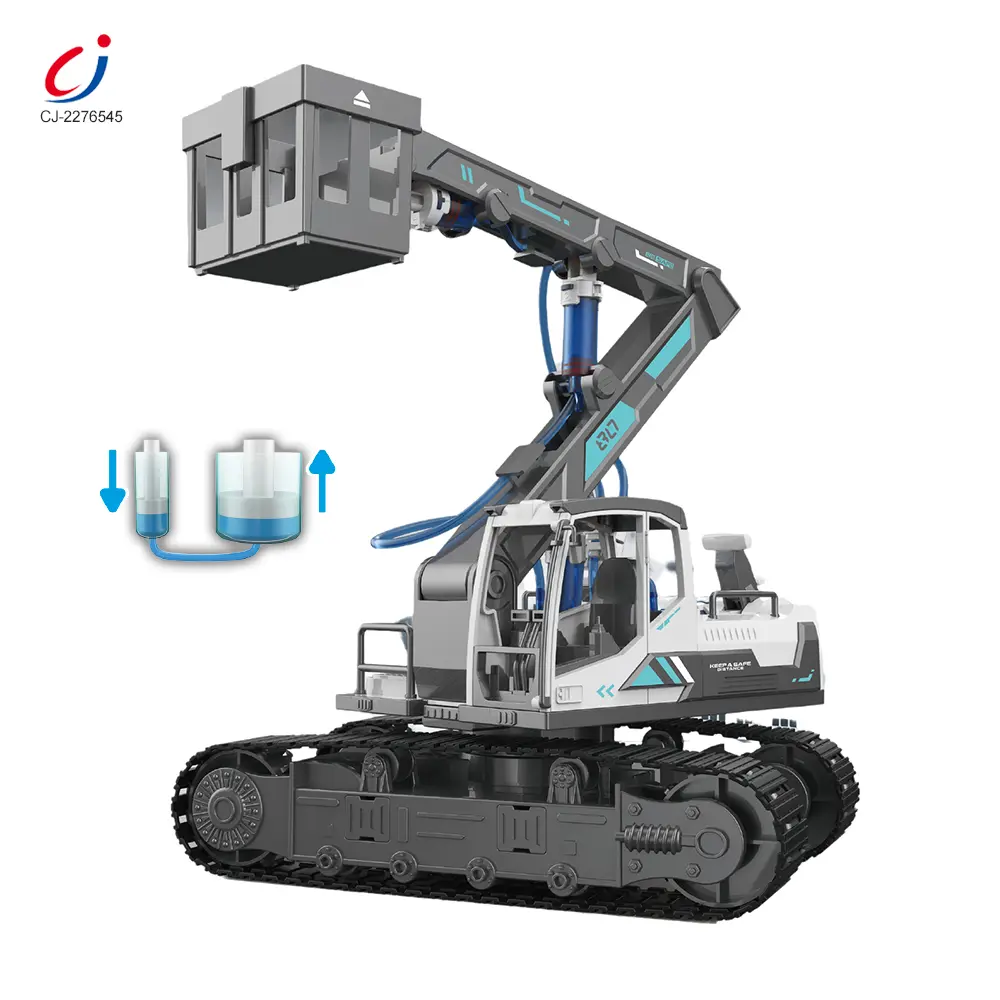
Toys that can be demonstrated in store often have stronger conversion potential because they allow customers to quickly understand the play value. This is especially useful for products with visible effects or simple interaction.
Good try-me products may include:
- bubble toys with visible bubble effects
- light and sound toys
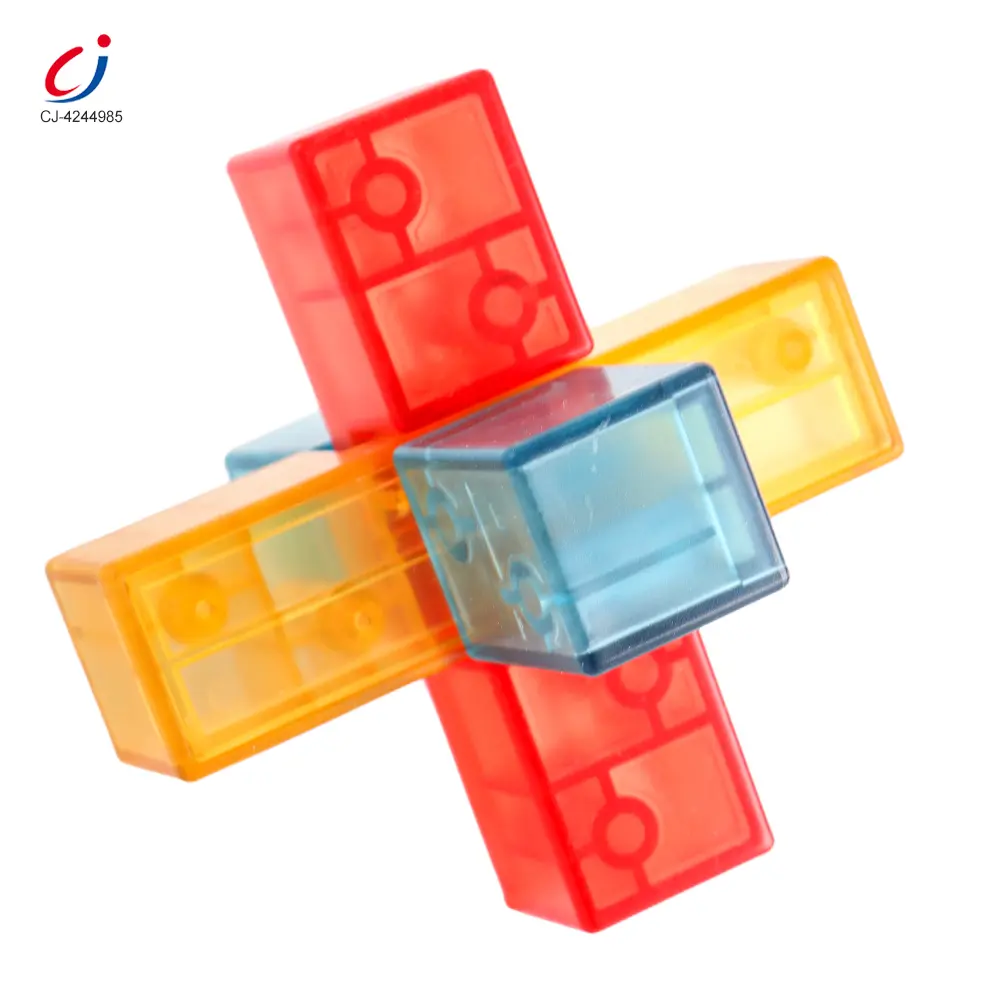
- simple building or assembly toys
- interactive parent-child toys
- products with moving parts
- demo-friendly action toys
When children see a toy working, their interest becomes immediate. When parents can quickly understand the function, the purchase decision becomes easier.
This does not mean the toy has to be complicated. In fact, simple products with clear visual effects often work best. The key is that customers can understand the fun quickly.
3. Impulse Purchase Trigger
Many offline toy purchases are not planned in advance. A customer may enter the store for another reason, pass by the toy shelf, and make a quick decision because the product looks attractive, affordable, or giftable.
That is why impulse purchase triggers are important.
A strong impulse-buy toy usually has:
- an eye-catching look
- a simple function
- a comfortable price point
- easy decision-making
- giftable appeal
- compact and clear packaging
Price is especially important. If the price is too high, customers may hesitate and put the product back. If the price feels reasonable for a quick purchase, the product has a higher chance of being added to the basket.
For many physical stores, the best-selling toy is not always the most expensive or most innovative product. It is often the product that customers can understand quickly, at first sight, and buy without overthinking.
Practical Selection Advice for Offline Store Buyers
If your customers are physical retailers, supermarkets, toy shops, gift stores, or local store chains, product recommendations should be built around retail-floor conversion, not only online popularity.
| Selection Advice | Why It Matters | Best Fit Products |
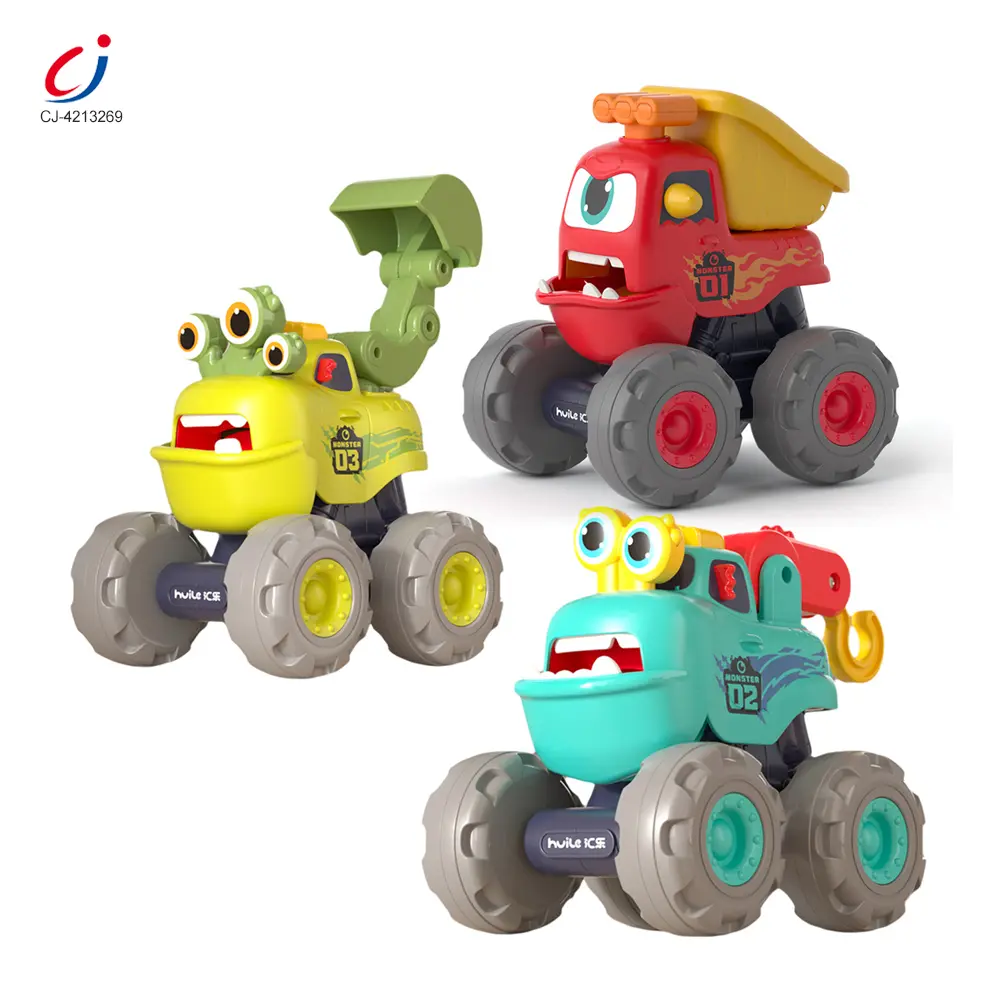
| Choose Window Packaging | Shows product size, color, quality, and details clearly. Builds trust faster on the shelf. | Vehicles, bubble toys, pretend play toys, baby toys, interactive toys |
| Keep an Easy Decision Price Range | Reduces hesitation and helps improve shelf turnover. | Impulse toys, small gift toys, parent-child toys, seasonal toys |
| Provide Display Suggestions | Helps store buyers plan grouping, shelf placement, and promotion. | Shelf sets, main item + add-on combinations, demo-friendly products |
For offline store buyers, the best recommendation is not just a product list. It should help them understand how the product can sell better on the shelf.
A supplier who can support product selection, display planning, and retail-floor selling logic becomes more valuable than a supplier who only provides quotations.
Offline Stores Need Shelf Bestsellers, Not Just Online Bestsellers
Online and offline toy sales follow different rules.
Online sales depend more on content, reviews, traffic, and digital conversion. Offline sales depend more on shelf visibility, packaging clarity, product display, try-me appeal, price comfort, and shelf placement.
For physical retail customers, the key question is not only:
“Is this product popular online?”
The better question is:
“Can this product sell by itself on a shelf?”
A good offline retail toy should be easy to see, easy to understand, easy to try, and easy to buy. That is why some online bestsellers may not perform well in stores, while some simple, clear, and well-packaged toys can become strong offline products.
最终想法
Offline stores and online platforms use different product languages. If your customers are physical retailers, choosing the right products means thinking from the shelf, not only from the screen.
For buyers serving toy stores, supermarkets, gift shops, convenience stores, local retail chains, seasonal display areas, or impulse purchase zones, Chengji Toys can support product selection from a more practical store-selling perspective.
We can help buyers consider product mix, packaging, display format, and market positioning — not only provide a basic product quotation.
For store-focused customers, the right product list should not only answer “What can I buy?” It should also answer “How can this product sell better on the shelf?”
If you are looking for toys with stronger offline selling potential, Chengji Toys is ready to support practical product recommendations and store display ideas.
网站: chengjitoy.com
电子邮件: [email protected]
电话 / WhatsApp / 微信: +86-13715966567